


The skeptics lost. Effective nootropics exist, particualrly in the form of stimulants and catecholaminergics. Drugs that help maintain cognitive function past reproductive years almost certainly exist, but I don’t know of one that has been proven to be highly effective.
Traditionally, the case against nootropics has rested heavily on the Algernon’s argument: that nature has already picked most of the low-hanging fruit, so traits like intelligence are already heavily evolutionarily optimised.
Whether the argument is true or false does not really matter. Using this logic to refute the existence of effective nootropics is nonsense. It’s the same idea that makes people think that businesses don’t work because markets are efficient — and they aren’t.
Many of the other objections raised against nootropic research: small effects, animal studies, and Russian science — do not hold up to scrutiny. The only real indictment of the field and movement is the focus on intelligence.
I.
IQ tests estimate general ability based on measurements like knowledge, memory, or mathematics. A drug might make people better at focusing on things in the moment, but worse at recollecting. This will worsen their performance on general knowledge and vocabulary subtests, but imporve it in other aspects.
Most studies of nootropics don’t even use complete IQ tests; they measure attention/focus rather than general ability, which is rather unfortunate. From this observation, many intelligence researchers have incorrectly claimed that nootropics are not effective, because there is “no evidence” their effects are ‘g-loaded’, that is to say, due to increases in general intelligence.
Let us imagine for a second there was a drug that increased general ability. If you administered an IQ test to people who hadn’t and had taken the drug, scores on subtests would not improve across all subtests. Becoming 20% more intelligent in one second does not magically increase your vocabularly or knowledge about the world; and it is these tests that are best at measuring intelligence.
The utility of g-theory is rather questionable when it comes to approaching drugs. If a stimulant made people better at focusing, then it’s possible that it could increase their vocabularies over time, as they attend to a greater quantity of words they do not understand. It’s not like a little focus hurt anybody.
II.
Intelligence is overrated, but it’s underrated when it matters — for economies. For nootropics, it works because it is one of the few cases where more of a trait is always better1. The value of intelligence decreases with age, as execution becomes more dependent on concepts already learned, rather than pure g. Neuroprotection, on the other hand, becomes more valuable with age; sadly, drugs that have been proven to slow or prevent cognitive decline are generally lacking in terms of evidence.
I’m not convinced I’d even notice a 15 IQ improvement, if it didn’t change how I feel.
One could ask then: why care about marginal improvements to a trait that does not even matter that much?
Mathematically, 1 IQ point translates to an increase in lifetime earnings of 50,000$, so a drug that increases IQ by only one point breaks even as long as it costs less than $100 per month to use; assuming young dosing that continues into adulthood.
At the group level, even a 3 IQ point boost has a large effect. Empirically, an increase in national IQ is associated with an increase in GDP per capita of 9.1%. If we assume half of that effect is causal from IQ→GDP per capita; if the national IQ of the USA increases from 98.7 to 101.7, then its GDP per capita would go from 84,000 to 96,000.
IIII.
The evidence for many drugs, particularly novel ones, rests on animal studies. These have been traditionally brushed off as useless, which is irrational. All “proven” nootropics that have effects on people’s minds — alcohol, caffeine, nicotine, amphetamines — have the same effects on animals. They are extremely useful for looking at receptors, blood-brain barriers, analogous traits, and toxicity.
The value of human studies comes from evaluating effects on traits subjective experience, socialisation or language that don’t translate well to animals, or calibrating doses. Most nootropic studies in humans don’t even study these traits.
Few drugs and interventions have effects in animals, but not humans. Caloric restriction is a genuine example that has to do with animal size and lifespan. Arsensic is considered a carnicogen in humans, but not animals.
Empirically, in drug research, translation from animal to human studies is pretty good. The problem comes with approving drugs based on animal studies — this could be due to problems with safety, efficacy, or tolerability in the drug, or incompetence/inefficiency within the FDA.
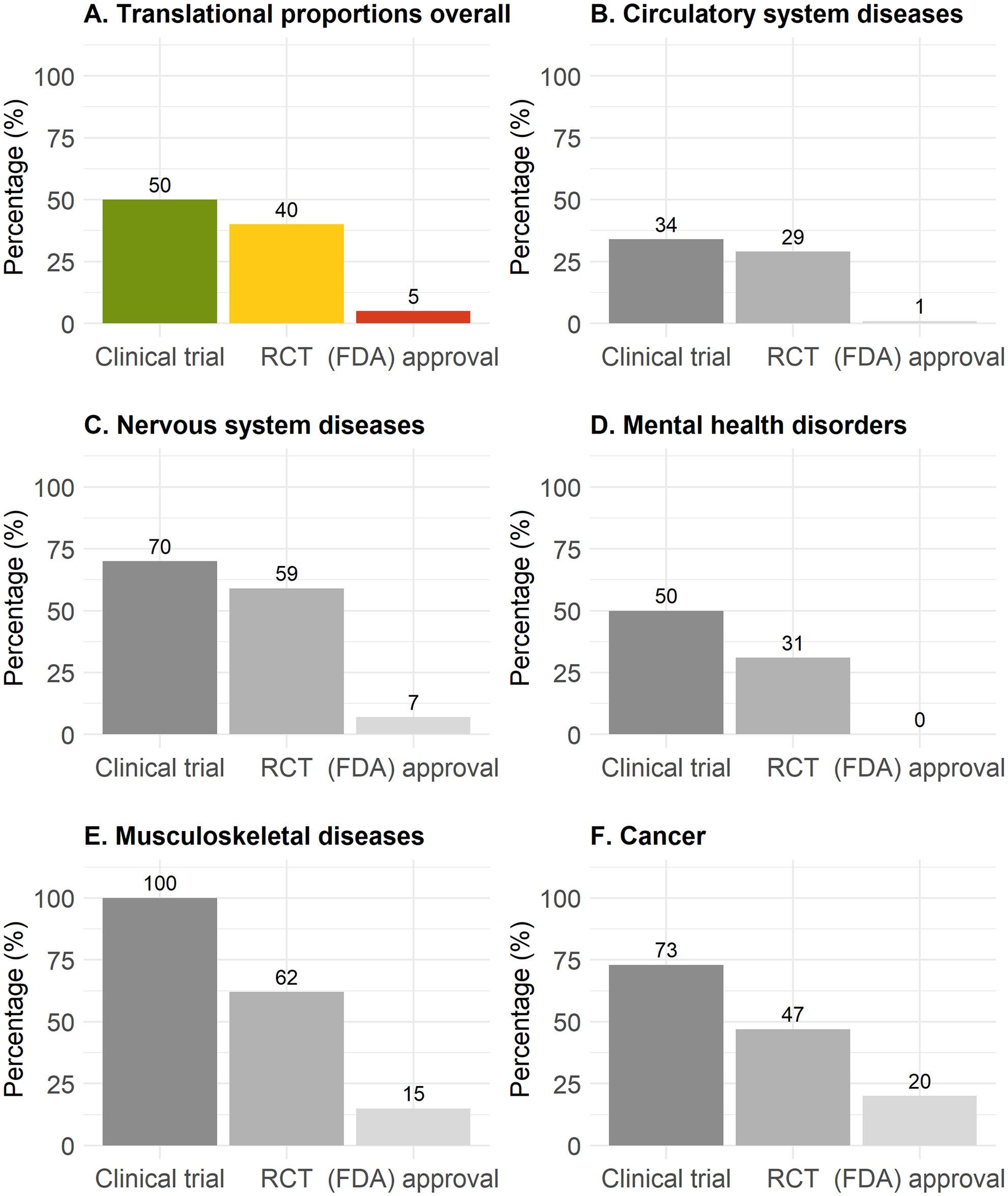
We assessed the proportion of therapeutic interventions advancing to any human study, a randomized controlled trial (RCT), and regulatory approval. We meta-analyzed the concordance between animal and human studies. The risk of bias was probed using a 10-item checklist for systematic reviews. We included 122 articles, describing 54 distinct human diseases and 367 therapeutic interventions. Neurological diseases were the focus of 32% of reviews. The overall proportion of therapies progressing from animal studies was 50% to human studies, 40% to RCTs, and 5% to regulatory approval. Notably, our meta-analysis showed an 86% concordance between positive results in animal and clinical studies. The median transition times from animal studies were 5, 7, and 10 years to reach any human study, an RCT, and regulatory approval, respectively. We conclude that, contrary to widespread assertions, the rate of successful animal-to-human translation may be higher than previously reported. Nonetheless, the low rate of final approval indicates potential deficiencies in the design of both animal studies and early clinical trials. To ameliorate the efficacy of translating therapies from bench to bedside, we advocate for enhanced study design robustness and the reinforcement of generalizability.
The internet is generally skeptical of the Russian nootropics, claiming there is “no evidence” they work. Actually, there is a ton of it. It just happens to be written in Russian, and most of it is in animals. I don’t speak Russian, but I do speak statistics.
There’s also an implicit idea among many people that Russian research is bad. I haven’t worked at Russian universities, so I can’t speak anecdotally, but there’s no data that suggests it is uniquely awful. Plagiarism rates in Russia are relatively high, though I would consider that a relatively minor infraction — I should note they county self-citations. Though, I assume that fraud rates are higher in countries with higher levels of plagiarism.

From what I see on the internet, Russian academic misconduct is heavily concentrated around faked/ghostwritten/plagiarised dissertations and duplicated papers to boost citations.
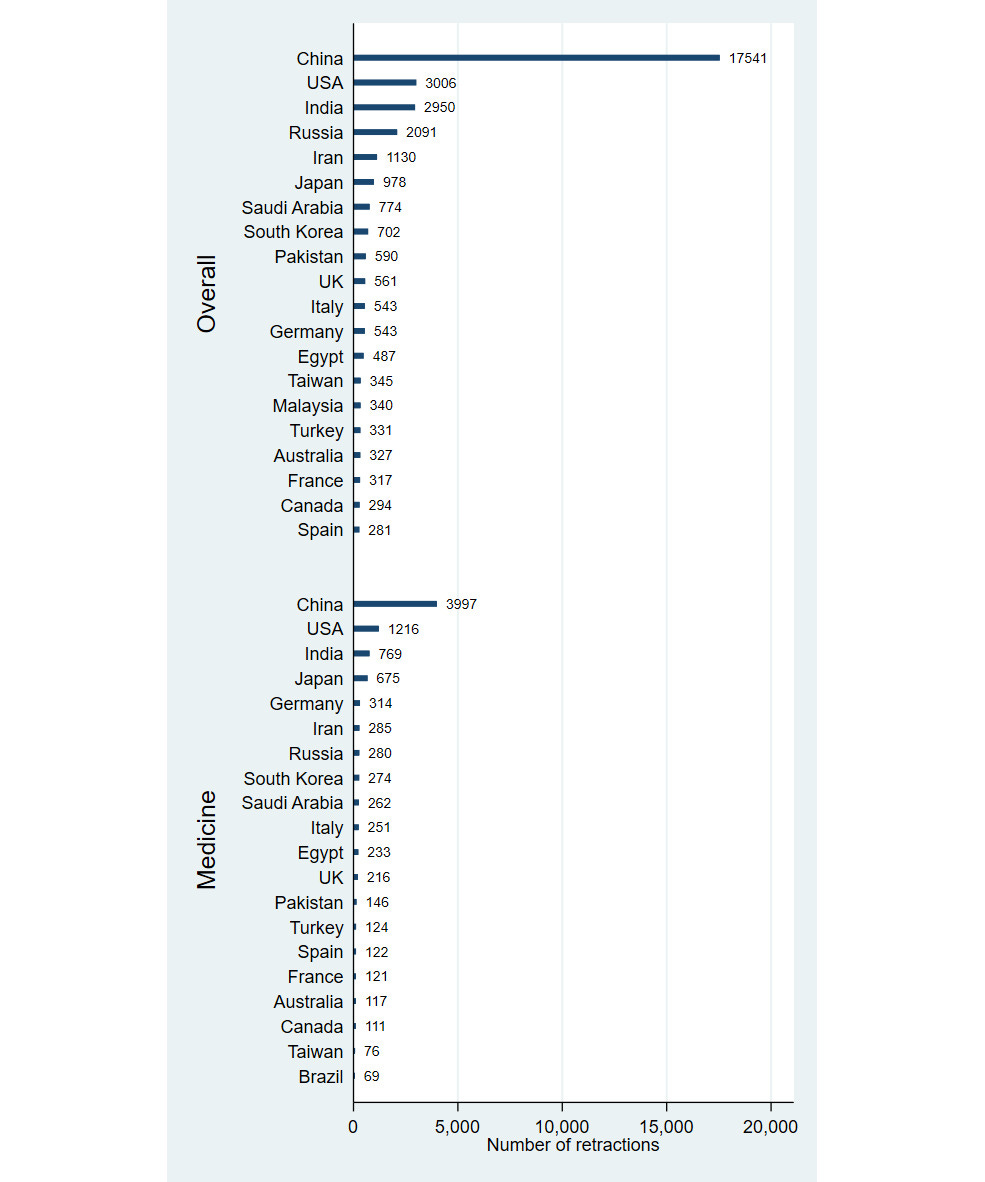
If we are talking about fraud that actually matters — in medicine — Russians are pretty tame. Per capita, they are on par with the United States and most European countries in terms of retractions.
Another red flag people commonly raise in research is research groups — like that Croatian one that is behind a lot of the BPC-157 research. Personally, I don’t think this is necessarily a bad thing. If anything, it makes me less likely to believe that the research is fraudulent; people like this draw attention, and their collaboration raises the stakes of what they are doing. If they just wanted to publish or get titles, they would plagiarise or do less glaring research.
It would still be best to see if a drug has positive results outside of a particular group, of course; I think it would be more likely that a research group would suffer from group-think or ignoring a bad side effect, and it would be less likely that they would commit deliberate fraud, given more people are involved.
VV.
IQ tests, despite their flaws, are generally much better than anything else psychology has to offer. Scales of depression, for example, are not great. TLP notes that most of the effect Zyprexa has on alleviating depression comes from changing sleep and appetite:
Take the simple example of depression, as measured by the popular Hamilton Scale. The scale measures insomnia and weight loss, but not hypersomnia and weight gain. Using this scale, a patient who sleeps too much and eats too much is less depressed than someone who sleeps too little and has lost weight. And, any drug that fixes sleep and makes you gain weight has an advantage over drugs that don’t. In fact, a third to half of the improvement on the Hamilton could be accomplished by improved sleep and appetite alone. Go Zyprexa.
Predictably, we’ve made the most scientific progress in things we can measure: blood pressure, glucose, obesity, genes, and muscle mass. Drugs that improve things that are difficult to measure — sleep, gut health, mood, and pain — sometimes still have effective options, but they typically come with more side effects or uncertainty in terms of potency.
An effective treatment for autism probably exists, but it’s too hard to evaluate, because social cognition is difficult to measure, and autism also carries a lot of quality of life and compounding effects. Worse social skills lead to less frequent and high quality interactions, which then make developing and expressing those skills more difficult. People couldn’t treat typhoid before they had anti-biotics. To know that anti-biotics could work, we had to be able to see bacteria. Happiness looks like a complete black box, even if you account for the difficulty of defining it.
There is, indeed, a problem of conceptualisation. Personality, psychiatric disorders, attention, intelligence, memory, wakefulness, affect — these aren’t independent factors. Drugs frequently affect multiple of traits at once, even after accounting for the problem of categories.
Improving personality and affect is far more valuable than improving intelligence. Everybody, to some degree, is rate-limited by intelligence; people’s specific limitations in personality vary based on the individual. The average person would have far more to gain from improving their 2 worst personality traits than getting a 15 point boost to IQ.
III.
A common thread I see in drugs that have evidence for improving cognitive ability is that they are all stimulants. This doesn’t particularly surprise me; there are reasons to think that the human body would not want to chronically upregulate neural activation.
When it comes to tolerance upregulation, I am an advocate of cycling; that the ideal stimulant protocol would involve taking modafinil one day, then taking an XR amphetamine, then a day of caffeine/nicotine, and then the cycle is repeated. This would make it so the different pathways by which stimulation is downregulated are diffused, so that the maximum benefit from each is achieved.
VII.
For reference, this is how I interpret effect sizes:

In statistics, the p-value determines the probability of observing an effect as or more extreme than the one observed given a model; usually a null hypothesis — that there is no effect. The p-value does not estimate the probability that the null hypothesis is true. Because of widespread p-hacking, even very low p-values can’t be trusted, unfortunately.

There is much more to interpreting scientific studies than these two numbers: methodology, publication bias, blinding, fraud, and whatnot. On the subject of blinding: it’s not possible to do blinded studies with real drugs; arguably not even necessary.
X.
When I look at nootroptics, I will be assessing:
Whether the substance does anything.
What that is, or is supposed to be.
Whether taking it is worth it, the relevant side effects, and evidence regarding changes in intelligence or mental state.
Some drugs are so popular and established that there is basically no point to studying them, at least, not in the same way we research other drugs. Caffeine clearly keeps people awake, but it’s not clear if it makes people smarter. Among these, I name: Caffeine, Nicotine, Amphetamines, Modafinils, Alcohol, Opiates, Cocaine, Hallucogenics, Benzos, Ketamine, MDMA, and Cannabis.
It’s fairly uncontroversial, scientifically speaking, that sleep-deprivation reduces cognitive performance. Anybody who has been sleep-deprived before, meaning everybody, can tell you the same thing. As such, I’ll take for granted that any drug that keeps you awake will make people smarter at the aggregate level, even if it’s not a strict nootropic.
‘X drug vs Y drug’ debates can get fraught by comparing doses. 50mg of bromantane might get beat by 10mg of adderall, but maybe 200mg of bromantane beats 10mg of adderall. Bcause of that, I consider the best drugs to either be ones that are so well-tolerated that taking high doses isn’t obstructive; or ones with a dose-response effect.
Tolerance and dependence probably exist for every drug; at what point the tolerance kicks in, and how brutal the dependence is differsfor every drug. Drug dependence is expensive, uncomfortable, and psychologically pessimistic. Which was why I quit stimulants when I was around 23-24. Later, I accepted I had a body that did not work on its own, so I started using them again.
Even drugs like modafinil induce tolerance, even though scientific literature claims they don’t — my lived experience, and that of others, says the opposite.
Many studies restrict themselves to healthy participants, and people are quick to dismiss findings from any study that doesn’t do the same. “X supplement does nothing to people who aren’t deficient” is a bad critique if 40% of people have inadequate intake. A perfect, ideally healthy person would have an IQ of 10000 and not bother with nootropics. We take drugs because we are unhealthy.
Further reading:
The algernon argument (disagree with the framing of evolution)
Brief thoughts on a few nootropics
Bacopa monnieri
One of the most studied natural nootropics, which is believed to augment memory.
There’s a systematic literature review on the supplement. Large effect. Can’t say I trust it. Better meta-analyses find that modafinil has little effect on cognition in healthy people, but they found a large one (d = .77) here.
Maybe it works, maybe it doesn’t. Not personally interested in it.
Cerebrosylin
Meme peptide. An accurate, but pedantic review on the issue: its empirical studies are often conducted by the manufacturer of the drug and it has few null results. It has not been approved by the FDA. We don’t even know what cerebrosylin contains. The ingredients it is supposed to contain might not even cross the blood-brain barrier.
Oh, and a lot of cerebrosylin research is simply fraudulent.
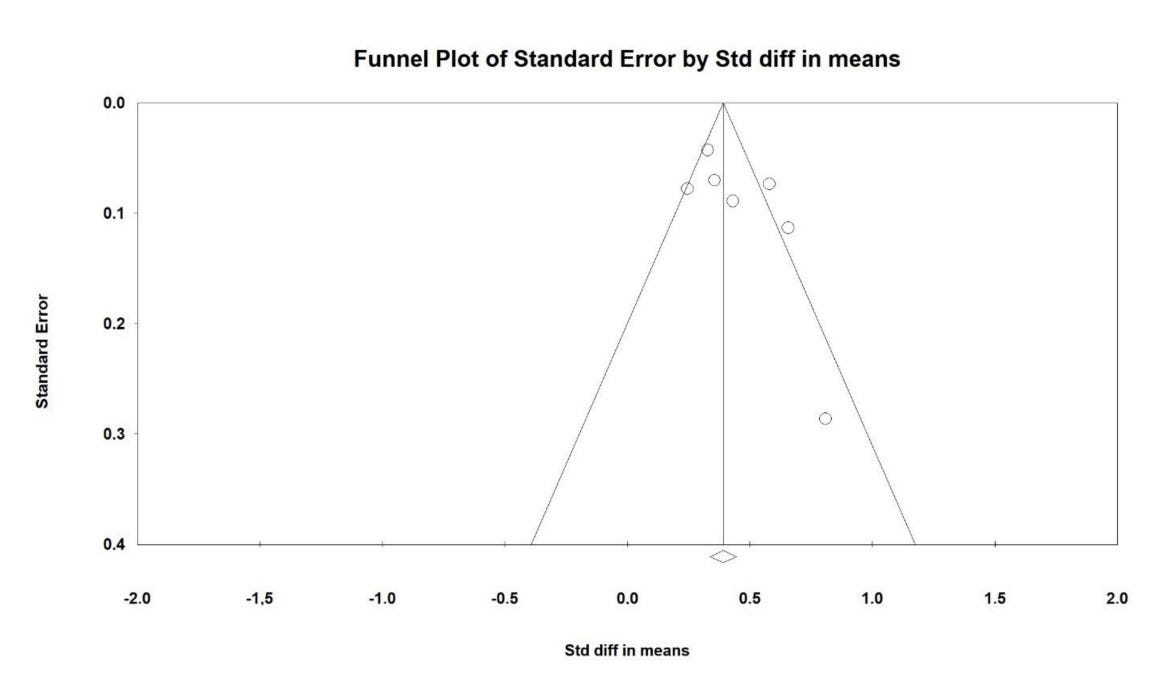
The funnel plot for its effect also looks pretty ugly, indicative of publication bias.
Pitolisant
More commonly known as wakix. It’s an inverse agonist to the H3 receptor (type of histamine receptor). It got approved by the FDA for treating narcolepsy.
My intuition regarding every single drug that intends to improve wakfulness is that they all work. Evaluating wakefulness in other people, or yourself, is pretty easy and straightforward. Never tried it, but I will if I get a narcolepsy diagnosis.
The only downsides of a higher IQ are autism, autoimmune disorders, and allergies. Maybe unconventional sexual behaviour too — low fertility and bisexuality in particular; that depends on your values. None of the effects here are large.
Did you come across any studies of low doses of cocaine? In the Andes, mate de coca is a popular beverage made from coca leaves. The active ingredient is cocaine, but at a much lower dose than the recreational drug of the refined form. Anecdotally, I could see it having a nootropic effect.
Except they have downsides. People overestimate the addiction aspect but it is an anorexic and all cognitive benefits go away if you can't eat.
Let's assume that you managed that, you can develop a fever and a mild heatstroke will erase any benefits from cognition. ,
Stimulants raise psychosis risk dramatically.
Papers and scientific research wildly underestimate side effects in people (except for addiction risk imo). This proves the no free lunch people right. This is no low hanging fruit.