

The hype around this drug is massive. A stimulant with anti-anxiety, anti-fatigue, and nootropic effects at the same time. It has no substantial crash, tolerance, or dependence. It’s well-tolerated and has few side effects1. Most anti-anxiety drugs either don’t work or have horrible side effects.
The effects of bromantane last for 10 hours, and the lethal dose in animals is around 8g/kg; the conventional dose in humans is 50-200mg. It’s not something patients will overdose on.
The only country that has approved it as a treatment is Russia — for neurasthenia, aka chronic fatigue. Predictably, most of the scientific literature on bromantane was written in Russia, so the drug hasn’t been able to diffuse to the West.
The history of bromantane’s development is encouraging. It all starts with an antiviral, amantadine, that was developed to treat influenza. They found out by accident that the drug was also a dopaminergic stimulant. This led to the development of bromantane, a drug that lies in the adamantane family — drugs typically used to treat viral infections or neurodegenerative diseases.
Does it actually work?

Pharmokinetics in animals (skip if bored)
The dominant theory as to why bromantane works is by upregulating dopamine synthesis, similar to the way MAO-A inhibitors work, but without the drug interactions and side effects that make them unpopular.
This paper is foundational to that theory. They essentially tested all of the hypotheses of the theory: whether bromantane changes gene expression, whether it increases dopamine, whether it changes neural activity, and whether the change of neural activity holds when blocking the activity of dopamine.
They tested the gene expression effect by seeing whether bromantane elevates the gene expression of tyrosine hydroxylase, which is what synthesises catecholamines like dopamine, relative to a control gene (Hprt). They had rats take bromantane, and sacrificed them at different time intervals, and checked the expression of these genes in the ventral tegmental area (VTA). These were their results:
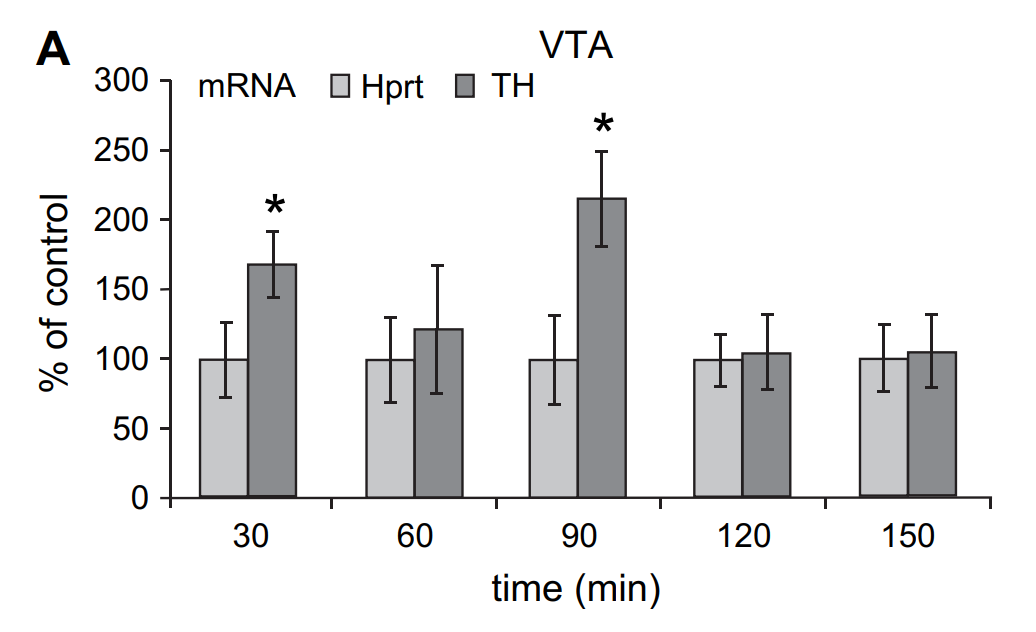
These p-values are awful, but I still believe the result. These are separate groups of rats, and in each one, the gene expression of TH was higher than that of the control gene.
In what I believe to be different rats, they checked whether levels of dopamine and L-DOPA were higher in the rats that took bromantane. The finding here is a little dodgier, statistically, but it’s not terrible. They are reporting lots of outcomes, but they are still testing different groups of rats at each time interval.
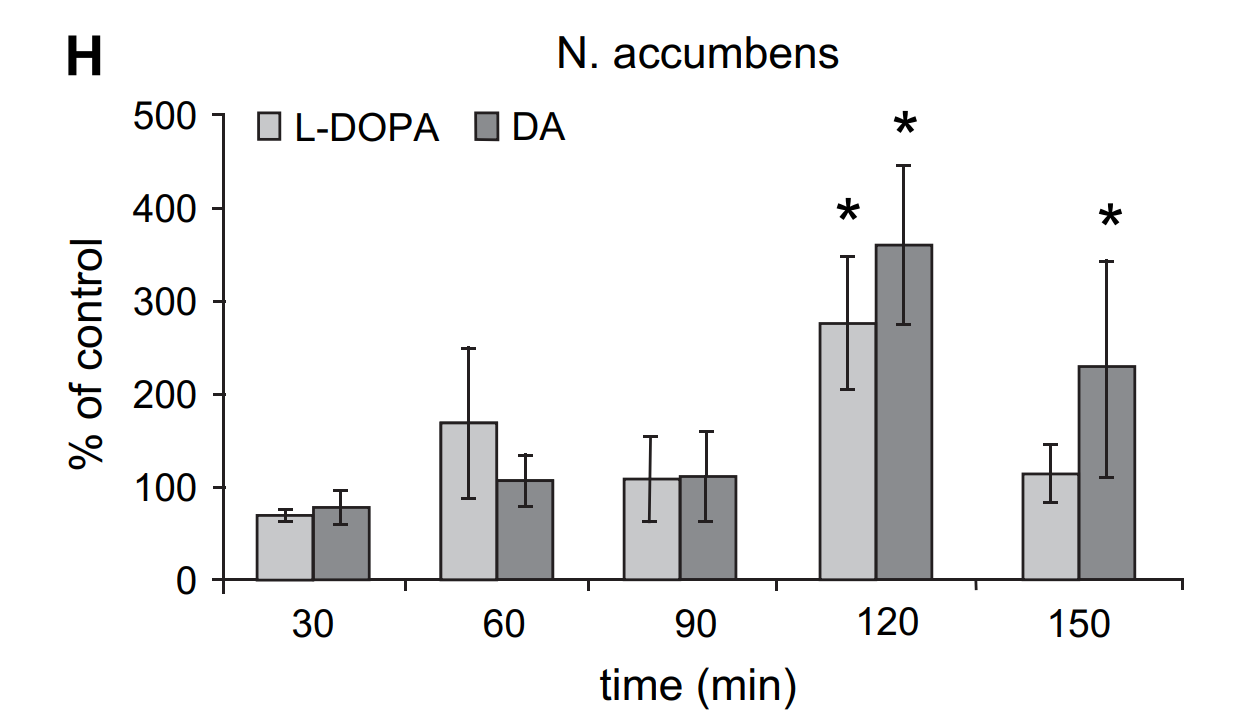
They also checked dopamine levels in other regions of the brain, which also give positive results. As with the prior chart, it’s hard to write these off as false positives because there are so many positive effects here; regardless of p-values.
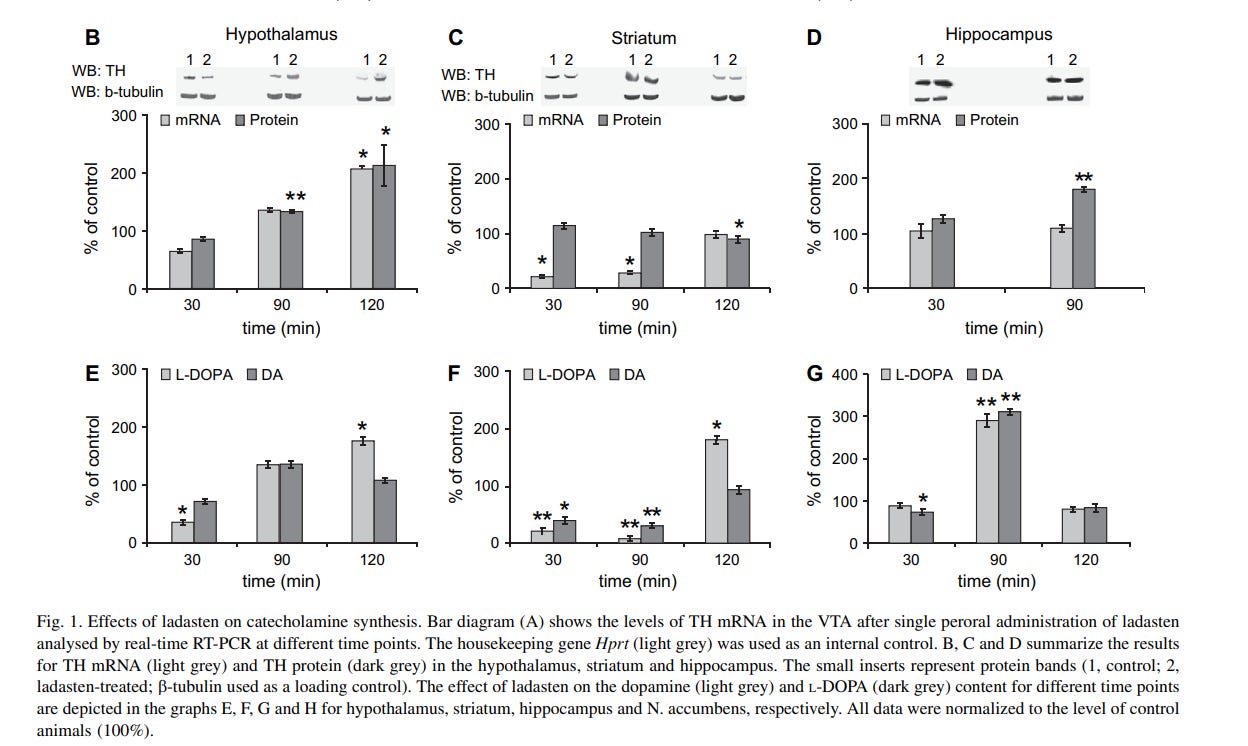
In some of these groups, particularly the 30/90 min groups, levels of dopamine appear to be lower. This might be because bromantane releases dopamine in addition to upregulating the synthesis of it. Because this paper is looking at how much dopamine is in the whole tissue, it can’t examine the localised concentration of dopamine outside the cells. Given the drug is not well studied, I’d caution against any particular interpretation of how or why it works.
A theory as to how memories are created and skills are aquired is the transformation of short-term potentiation (STP) into long-term potentiation (LTP). A STP is a neural firing that occurs once, then returns to baseline; an LTP is a neural firing that maintains itself.
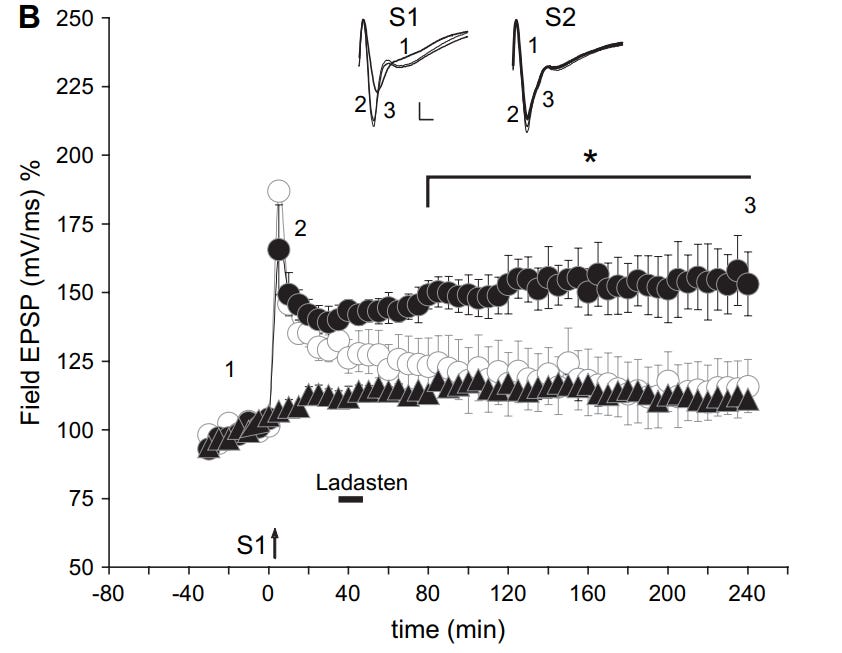
In the prior study, they cut out a slice of the rat brains, and stimulated them with electrodes — which is called tetanisation. The rats who were administered bromantane (black circles) had stronger and more durable synaptic responses than those administered with DMSO (controls, grey circles).
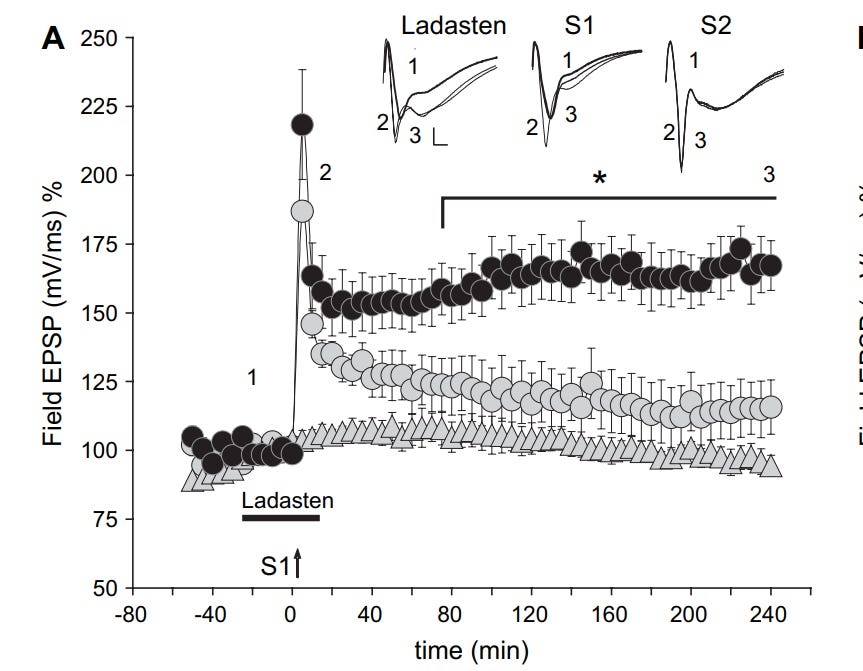
The elevation in synaptic strength in that study was not due to the bromantane itself; they did a second study where they administered bromantane to the rats but didn’t administer a neural shock. In this group, no elevated synaptic strength occured (black triangles).
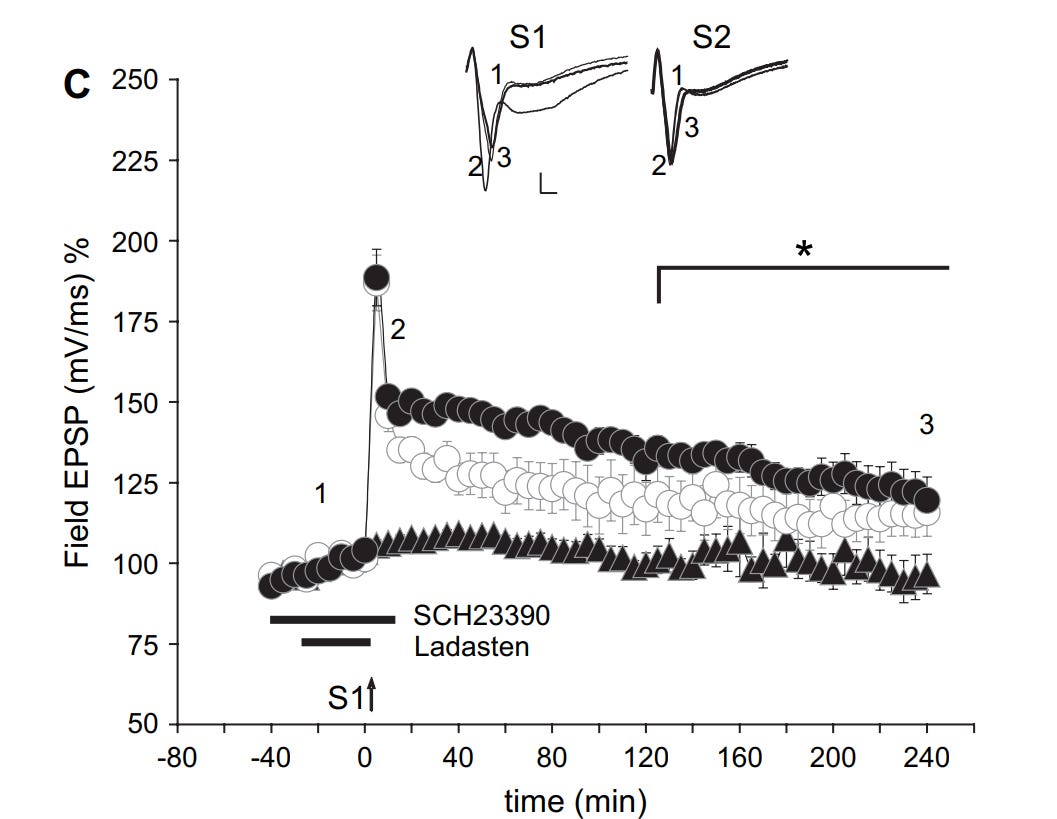
They then tested whether adding a dopamine D1/D5 blocker, SCH23390, affected the results. It appears that administering bromantane with the blocker attenuated the rise in synaptic strength, but didn’t completely eliminate it, relative to the control group that was given DMAO and the tetanisation. Potentially, it could be because dopamine is a precursor to norepinephrine, which is implicated in neuroenergetics and perception of novelty.
There are other studies that evaluated the effect of bromantane on dopamine synthesis and gene expression (#1, #2), as well as ones that find anti-inflammatory effects. Frankly, what exactly bromantane is doing in the brain is not as interesting to me as the actual evidence regarding whether it works.
The human studies
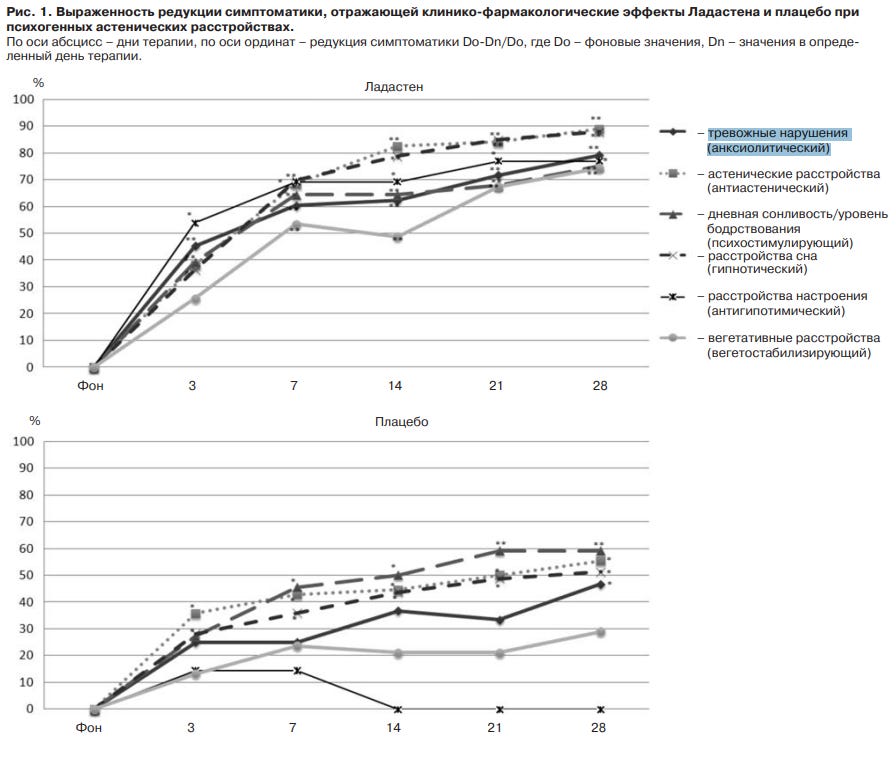
One small study found that Bromantane reduced how much anxiety patients fell, but the placebo did not. 8/15 subjects in the placebo group eventually dropped out, but none of the 15 in the bromantane group did. The dose of 100mg was considered optimal for all patients except for 2 — one who opted for 50, and another who opted for 150.
In this chart, the black line with diamonds denotes the effect on anxiety and the grey dotted line with the square denotes the effect on alleviating fatigue. From the text, I can’t tell if these are clinician-rated or patient-rated.
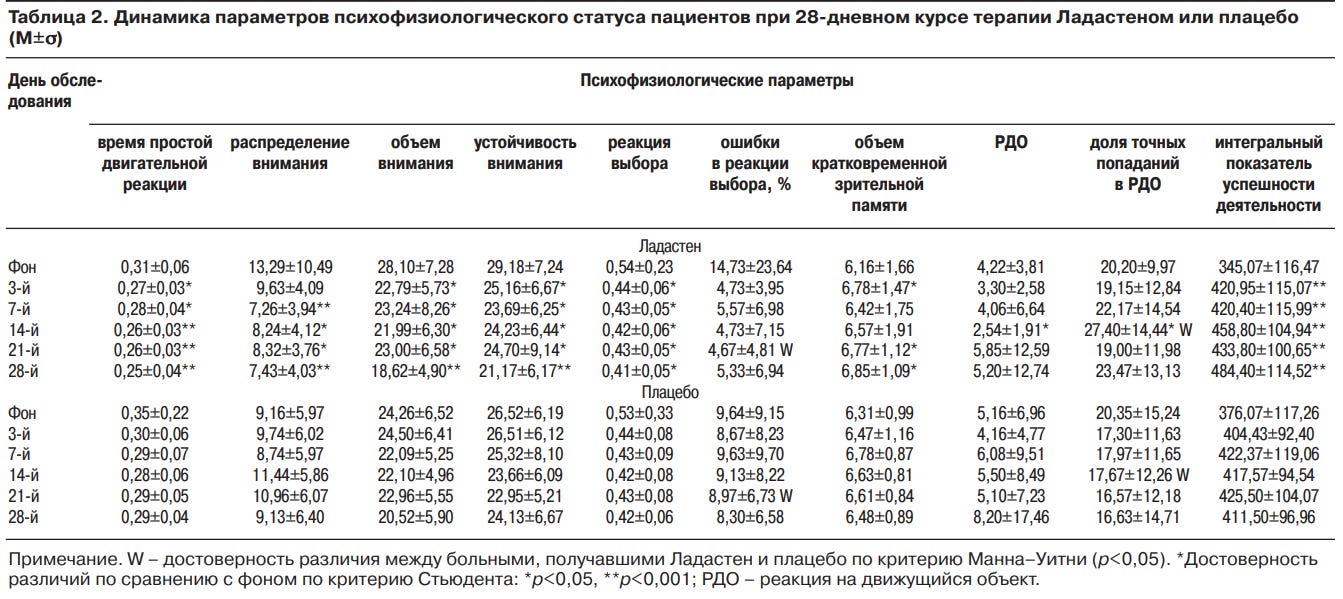
Bromantane improved performance on global cognitive performance by about 1 standard deviation, though I assume that figure with be a third or fourth lower in a replication attempt.
There is a much larger study and frequently cited study on bromantane… that has no control group. I don’t think this is that bad. It’s a stimulant — people will know if they are on it. A placebo would only be useful for cataloguing what natural improvement would look like.
Statistically, the result looks fairly undeniable. The patients got much better during the 30 day period they were taking bromantane:
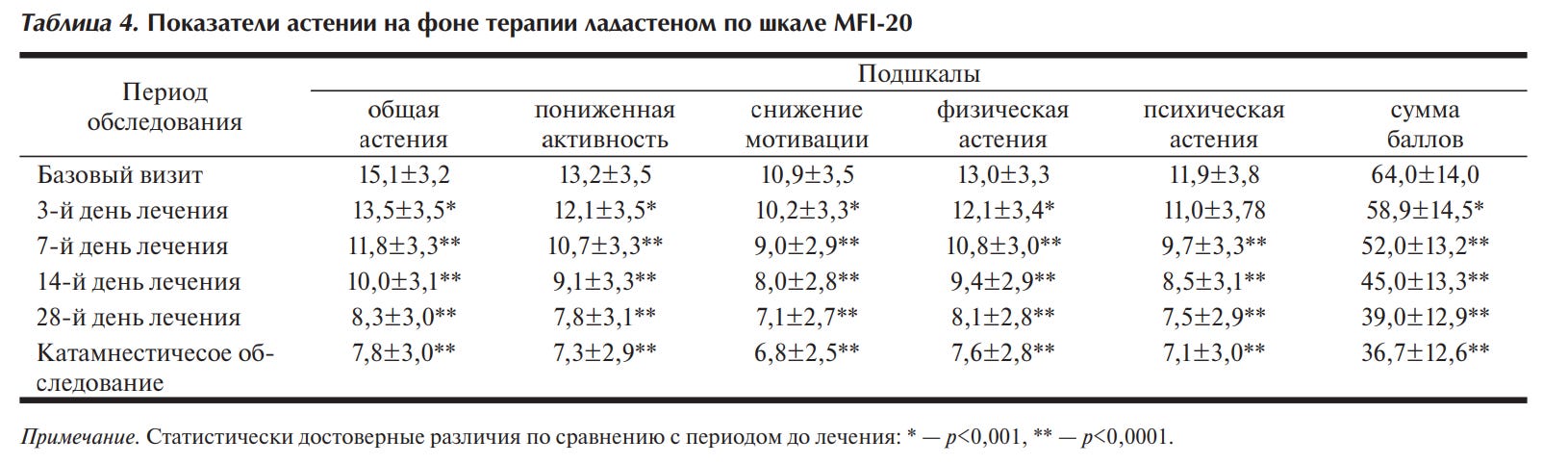
The problem here is that, even after the patients discontinued the drug, the majority of the patients improved in terms of mental health. According to both themselves, and the clinicians.

It’s unlikely that bromantane does much more besides upregulate dopamine synthesis, perhaps norepinephrine and adrenaline indirectly, and improve the immune system. There’s little reason to think that the effects of the drug are permanent. There is a small drop-off in efficacy after the patients discontinued the drug, but the overall story points to remission + nonpharmacological improvement.
Overall
I think bromantane works, but is generally overrated. It has a nice niche as a stimulant that does not increase anxiety, otherwise, it’s outclassed.
