

This might sound a little insane, so I might as well give some background: both of my parents aged gracefully in terms of mind and body, so I figured that aging wasn’t a big deal. Even if that wasn’t the case at the population level, it probably would be for me; the heritability of intrinsic aging is about 50-60%.
The only times I’ve really felt any dread over aging or “old” were when I got rejected from graduate school (twice), and realised how old I would be until I had a real career, assuming I stayed in academia. That is, until I started taking bodybuilding seriously (8 months ago?).
The first thing I noticed was how rapidly I was making gains in strength, despite the fact I was gaining lean mass slowly; I learned later that it’s essentially impossible to make large gains in muscle past the beginner phase without steroids.
And then a thought crept into my mind: what if I died without ever getting jacked? I am 26. I maybe have 15 years left of peak-level physiology for building muscle; what if I live those through those years and just never do it, or just die before getting there?
I would watch people and think: ‘this person will die, probably in agony, and this is how they are spending their life’. Those animals can argue about whether Sydney Sweeney is a white supremacist. I am getting on gear.
So I went online and found places I could buy steroids. There was a problem: I am poor. And I have a feeling that saying “hello my mormon dad, can you lend me $400 so that I can buy steroids” is not going to go very well. There is also something undignified about asking your dad for money to buy steroids. So I decided to wait until I could actually afford it.
So I waited… and I never bought them. I don’t even want to buy them anymore. There isn’t really any one reason. Part of it is that I stopped thinking about death every 5 minutes. Part of it is that I am short and have an effeminate face; I would look ridiculous if I got extremely jacked.
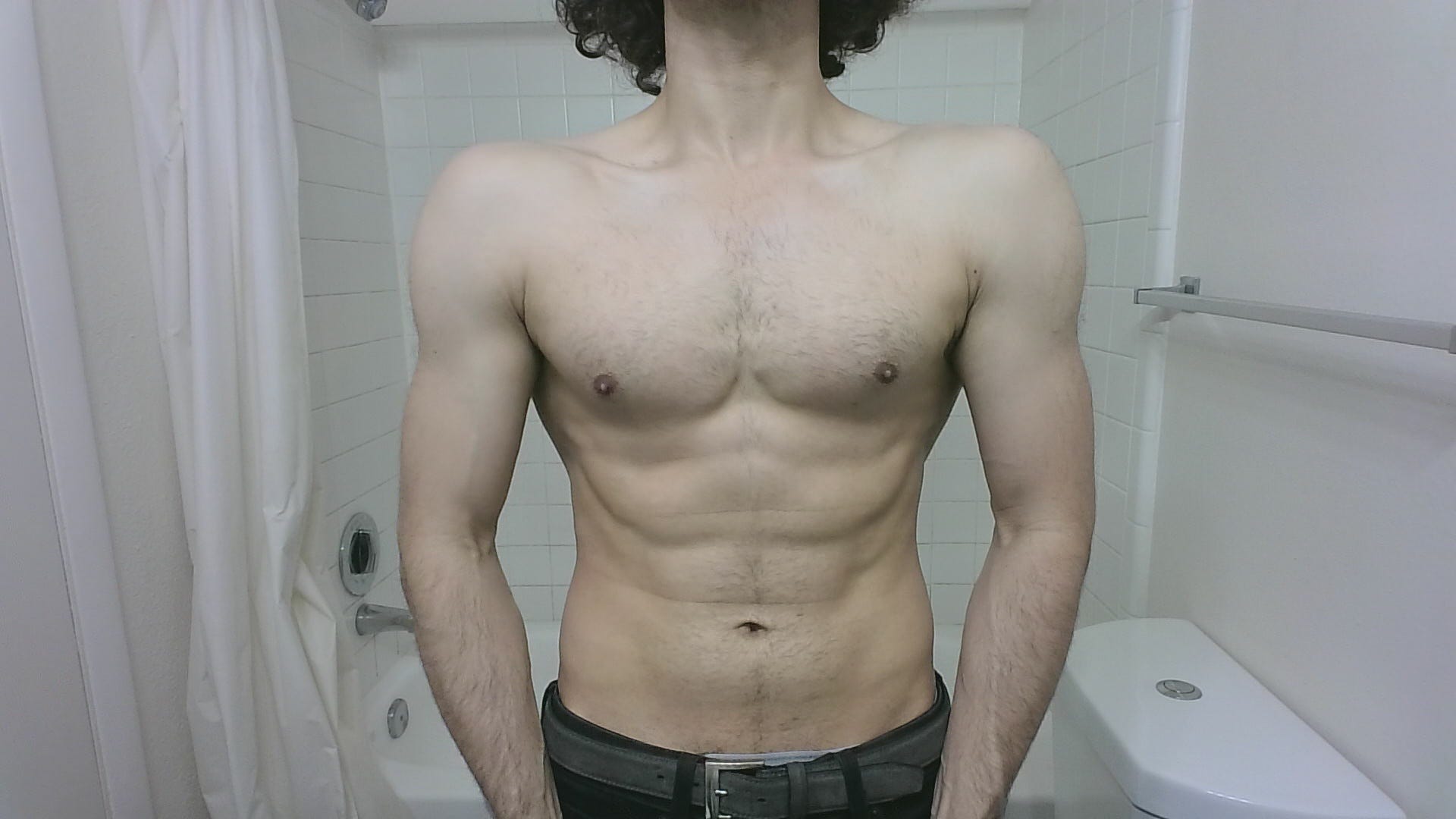
It is true that I have not moved from 62kg for like 3 weeks after quitting reta… but I have faith. Worst case scenario, I buy mass gaining powder.
The gist
The frame with which steroids are spoken of is rather suspicious. Athletes looking for a zero sum, competitive edge at all costs. Superficial and vain bodybuilders. Macho men with body dysmorphia. That only people who are irrational or under pressure would bother using them.
Looking through the literature, two things seem pretty clear: that the health risks of using steroids are overblown, and that they are also highly effective at building muscle in a short amount of time. There are ways the side effects and risks can be mitigated, but they can’t be eliminated: steroids can always be misdosed or laced. And some people, physiologically, can’t tolerate them even at appropriate doses.
Post cycle therapy or hCG is basically mandatory. Not just for harm reduction, but for managing symptoms of steroid withdrawal and holding on to gains after ceasing usage. Blood work is useful, but it’s not as crucial, especially for people using safer steroids or lower doses.
The science of steroids
…is pretty unambiguous. Steroids build muscle really well. Not creatine or caffeine well. Well, as in, they work as well as weightlifting alone.
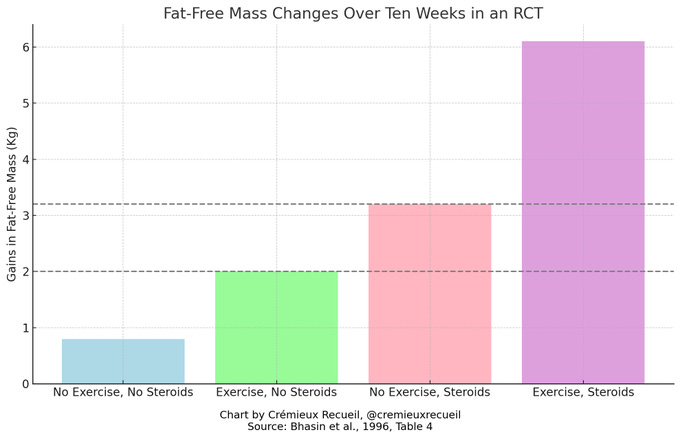
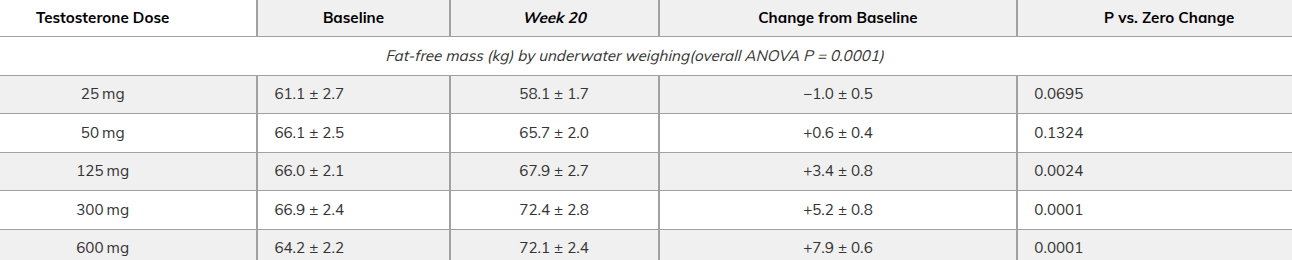
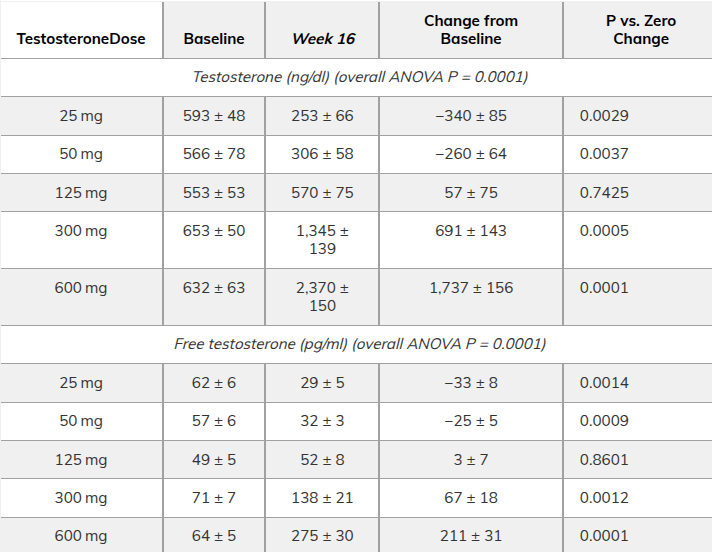
The dose-response relationship indicates that testosterone supplementation starts having large effects on gains around 300mg/week , which is around when testoserone levels rise relative to the baseline1.
It is the norm for muscle mass gains to be lost after steroids are discontinued. Prescriptively, this does not need to be the case.
When people naturally gain muscle through resistance training, if they keep exercising, they keep their gains. No increase in the production of testosterone is necessary; natural testosterone levels hardly correlate with muscle mass. The fact that extremely high testosterone levels build muscle does not imply that said levels are necessary to retain their gains.
There’s nothing magically different about muscle gained on steroids vs muscle gained naturally; the same pathways and physiology are responsible for both.
Steroid-induced gains typically peter out in academic studies and sometimes in bodybuilders because people do not do enough resistance training to maintain them; this is also the case for people who start resistance training and discontinue it.
The other reason steroids can disappear is that endogenous testosterone production naturally downregulates natural production, and said downregulation persists for some time after the testosterone clears from the blood.
The solution to downregulation is to either take a moderate dose of steroids, or do post-cycle therapy (PCT) after the steroids clear the blood. This involves using drugs like HCG, clomiphene, enclomiphene, and aromatase inhibitors to ease the transition from a steroid cycle to natural testosterone production; hCG can also be used on cycle to maintain testicular function.
HCG and clomiphene/enclomiphene are used to achieve the same output: kick off natural testosterone production, but through different pathways — HCG mimics LH which directly stimulates the testes; clomiphenes block estrogen receptors, which stimulates the production of LH and FSH. Aromatase inhibitors are typically only used when the ratio of testosterone to estrogen is too low.
V.
All steroids fundamentally work the same way. They activate the androgen receptor.
Beyond DHT, testosterone, and nandrolone, synthetic steroids have been developed, with the goal of desirable effects of steroids, while eliminating the undesirable ones. Typically, people run them with a testosterone base because they also downregulate the production of testosterone.
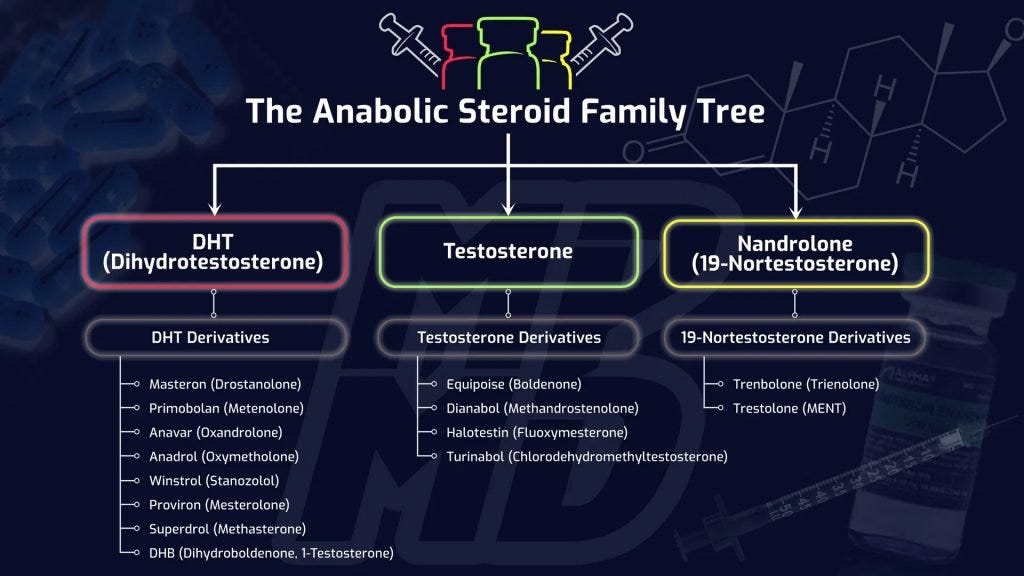
Sometimes, these synthetics have their own idiosyncratic effects. This is particularly notable when it comes to effects on lipids — winstrol infamously decreases HDL by a large amount, contributing to atherosclerosis.
That said, most of the differences in effects between synthetic anabolic steroids can be reduced to 5 components:
Ratio of anabolic/androgenic activity. The higher, the better.
Agonising other receptors, such as the progesterone and estrogen receptors.
Whether or not the steroid aromatises into estrogen. At high enough doses, this can lead to gyno (bitch tits) or water retention.
Whether the steroid is converted into DHT by 5α-reductase. DHT is highly androgenic relative to its anabolic effects.
17α-alkylation — a chemical manipulation made to synthetic steroids that allows oral steroids to survive metabolism in the liver, but also makes them toxic.
Generally, bodybuilders prefer steroids that are anabolic, selective to the androgen receptor, non-aromatising, non-toxic, and do not get converted into DHT. Predictably: anavar, primo, and nandrolone are the most popular synthetics; with the nuance that anavar is toxic to the liver, primo’s anabolic/androgenic ratio is a little low, and nandrolone is harder to tolerate than the other two. Unfortunately, these are also the steroids that are most frequently counterfeited.
III.
Traditionally, when people think of the undesirable side effects of steroids, they think of aggression, androgenisation, gynecomastia, and organ toxicity (liver, heart, and lipids). All of these effects can be actively mitigated or avoided by supplementing with certain drugs (e.g. hCG), avoiding the bad steroids (e.g. trenbolone) which actually do make people aggressive and hairy, moderating dosages, and cycling off.
Empirically, testosterone supplementation has mild side effects at normal doses (200-600mg) — a nice review on this. The side effects that were more common in people on testosterone were changes in lipids, decreased testicular size, and nipple sensitivity. Nothing too extravagant.

There’s another review on the side effects of taking oxandrolone (anavar), an oral steroid. Most at daily doses of 10-20mg, with one study going as high as 80mg, taken for 8 weeks to 5 years. Again, fairly mild, with the exception of liver toxicity.
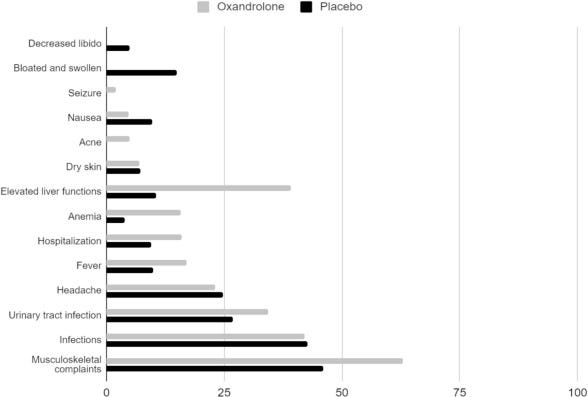
The elevated presence of musculoskeletal complaints in the placebo and treatment groups is due to the fact that anavar is sometimes used as a medication to treat burn victims, people with HIV, or spinal injuries.
The idea that testosterone and most steroids (besides the really strong ones) cause aggression is a myth. (Edit: conveniently, Cremieux just posted a literature review on the question)
Some anabolic steroids aromatise into estrogen, which causes gynecomastia, the growth of breasts in men. This can be avoided by taking aromatase inhibitors or avoiding steroids that aromatise. Because of individual differences in baseline estradiol levels and responses to steroids, it is typically recommended to do a hormonal blood work while doing an intense or complicated cycle of anabolics.
The androgenous effects of steroids are easy to target individually. Finasteride and other medications can help deal with hair loss. Accutane prevents acne. When it comes to androgenisation, holistically, the only two solutions are taking lower doses or steroids with lower levels of androgenic activity.
The question of toxicity is a little opaque — part of the reason steroids are unhealthy is that androgenisation slowly kills people; eunuchs lived 15 years longer than regular men in historical Korea, though I have my doubts about whether that difference is entirely downstream of hormones or even physiology.
Some steroids have toxic effects on the liver. They’re fairly uninteresting. Anavar, for example, has effects on biomarkers than are indiciative of liver toxicity, but they reverse once people stop taking the drug for 4 weeks.
Synthetic steroids also have effects on lipids, which aren’t well understood. Generally, they are negative — they increase LDL and decrease HDL. This is also true for normal testosterone. The exact effect of this on cardiovascular risk is hard to quantify, but my intuition is that it is not that large. Most people with persistently poor lipids do not develop cardiovascular disease until they are older; the effect of transiently low lipids must be assumed to be even weaker.
In terms of black swans, there are some case studies of bodybuilders who died at young ages, typically of heart attacks. The doctors know which steroids are present in the blood at the time of death, but not how often they were taking them, or even which ones. So it’s difficult to make judgements about the extent to which steroid use contributed to said deaths.
PED advocates have accurately argued that no drug is really safe, that steroids are not an exception to that rule, and that anabolic steroids are relatively benign compared to alcohol and tobacco. Many normal drugs have their own black swans: there is a one in a million chance that certain antibiotics can cause Steven Johnson syndrome — where part of your skin peels off and dies.
Humans have a long history of accepting enhancements that come with risks: adderall, laser surgery, orthodontics, and vaccines. Many of these things are controversial, but they don’t arouse the same passion that steroids do. As such, the stigma around steroids has little to do with something as abstract2 as health, or with human enhancement more broadly.
Personally, I think that trenbolone (anabolic steroid) is more dangerous than alcohol. I can’t prove it, since trenbolone’s scientific evidence is limited to… rats and cows. Most anabolic steroids, besides testosterone, anavar, and nandrolone have surprisingly little empirical evidence in favour of their efficacy. To believe in steroids, is to believe in stories, myths, and legends. You might not believe in those things. But the WADA definitely does. Good luck getting into the olympics on tren.
…So can steroid use be rational?
No. You can’t write down the positives and negatives of taking steroids onto a spreadsheet and make a mathematical decision. People have to make decisions on their feelings and intuitions. Sometimes, those feelings don’t work and people make bad decisions. But that’s not a reason to not make decisions based on feelings. There is no other alternative.
My own verdict on steroids is that the black swan type side effect are massively overrated, and basically nonexistent in people who use them responsibly. The negative effects of using them chronically — androgenisation and the gradual attrition of one’s health — are probably underrated, and should be studied more deeply.
The one thing I will say is that our culture underrates trying, doing something to see what will happen. When it comes to anything — careers, hobbies, foods, or lifestyles. People systematically overestimate the permanence of choices, and underestimate their ability to adapt.
The transformative element of life is always overrated. A body count of 20 does not irrepairably damage a woman. Addicts relapse. Lost weight finds a way to come back. The best predictor of future behaviour is previous behaviour.
Promises of eternal damnation or enlightenment can never be fulfilled. You can find that depressing, or you can take advantage of the fact that nothing is permanent. Cynicism never runs both ways.
Receipt:
I use the word ‘abstract’ as a slur.
What about HRT, but for non muscle related effects. Like drive, motivation, concentration, etc.