

Let’s say this is the true distribution of experiences people have on LSD:
0.1%: life changing positive experience
39.9%: positive, but not life changing experience
10%: nothing happened
39.9%: negative, but not life changing experience
0.1%: life changing negative experience
According to this information, the expected value of trying LSD is close to 0.
What happens to the anecdotal reports?
The 0.1% who had their lives transformed are probably going to tell everybody about it, and probably are much more likely to continue using psychadelics or engage with the community.
The 0.1% who had their lives ruined might rant about it on the internet or disclose it to a few trusted friends, but they are going to be relatively quiet.
The 99.8% who had mundane experiences will have various things to say.
But people have a tendency to misinterpret what happens to them, and so a small proportion of the people who had mundane experiences might think that it changed their life anyway. And this fraction might even be larger than the amount of people who actually did have life changing experiences on LSD.
So, if ~80% of the people in psychadelic communities say that the drugs changed their lives for the better, that’s not good evidence of the drug having high value in the abstract, and it might be the case that most of those people didn’t even have transformative experiences.
There’s also a status game going on here. You have a bunch of people who say X drug changed their life, and if you are skeptical of their report, they can always say “ok but have you tried it though”. And to some extent, you can’t really say they are wrong. And then people have a tendency to make identities out of drug use, so if you have doubts about how safe or effective psychadelics are, people whose identities are based on psychadelics are… not going to be happy about that. Regardless of their intellectual understanding of anattā and their control over their 8th chakra.
I am doing something a little sneaky here. Making up a statistical distribution and then fitting it to a bunch of observations is… not proper mathematics. What I am trying to articulate is this: the fact that people who love psychadelics say psychadelics are great means very little. They could have negative or positive value in the aggregate regardless of what people say about them; they are a selected and unreliable group.
II.
I have never tried any psychadelic. But I have had about a dozen episodes of sleep paralysis, typically accompanied by a full blown hallucination; and maybe a few dozen more mundane auditory/visual hallucinations when transitioning between sleep states.
The worst experience was waking up completely paralysed, and seeing my father try to rape and kill me. I felt quite a bit of fear, despite knowing he was a hallucination, and when he disappeared, the fear disipated quickly. About 5 minutes later, I walked up to my dad’s house to eat breakfast.
A fallacy I often see normal people make is thinking that negative, intense, or out of the ordinary experiences must have some deeper meaning or effect on people. Maybe they just don’t.
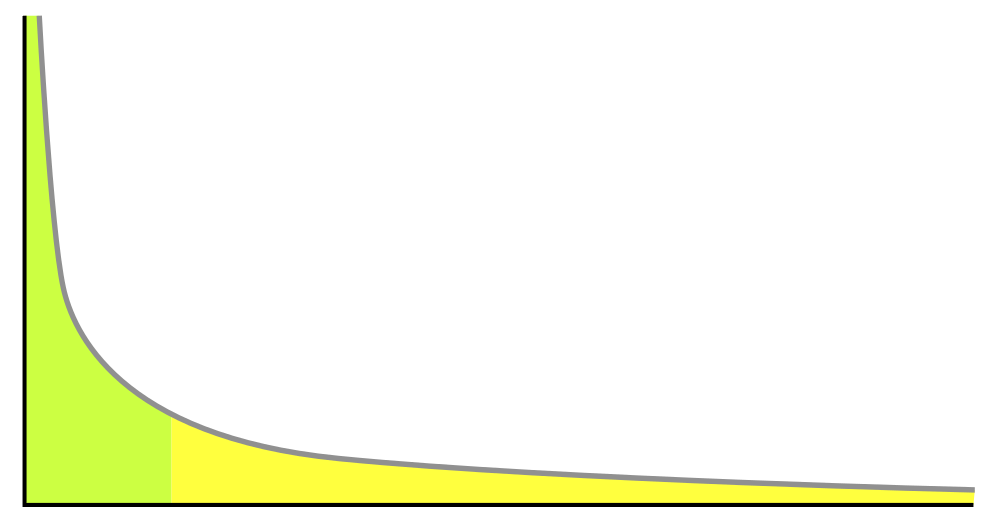
I don’t think life changing experiences are impossible at all. Environmental effects account for about 50% of variance in the distribution in the average phenotype, and if the effects of those experiences follow a power law, then it follows that there are experiences that contribute disrpoportionately to somebody’s self.
I just don’t see why we have to assume that any experience that is intense or out of the ordinary must have a transformative effect on people; or a better question: why we must assume that transformative experiences have to be intense or out of the ordinary to be legitimate.
A nice study on child abuse and psychopathology: adults can report subjectively how much abuse they thought they suffered as a child, and there can also be court records of that abuse. Occasionally, these differ: sometimes because adults lie, and sometimes because abuse is not reported to authorities.
Statistically, psychopathology tracks subjective reports of abuse, not court records.
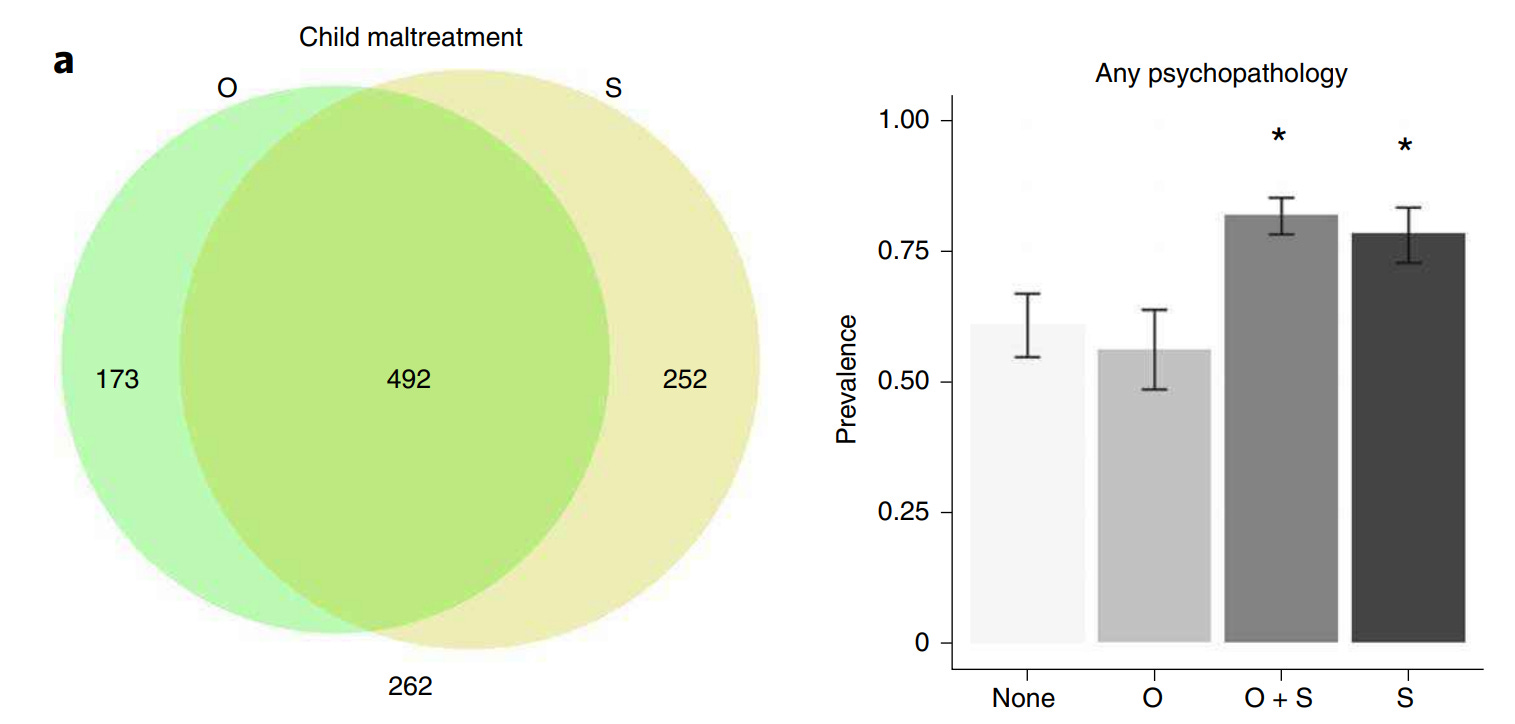
If we look at people who were actually abused as children, not just people who hallucinated the abuse, it looks like what happened did not substantially affect their personalities. That doesn’t mean that the abuse didn’t feel bad, or that it wasn’t abuse, just that most people just move on with their lives, regardless of whatever they think, or others do.
VI.
Hallucinations and dreams don’t have inherent meanings. Humans are bundles of cells and neurons that fire off signals that give them conscious experiences; the mind is flat. The exact process by which those experiences come about is completely unseeable.
That isn’t to say they are random. I assume, for example, that if you scientifically studied people’s dreams: neurotic people would have more negative and intense dreams, sexual dreams track sexual orientation, and extraverted people are more likely to have dreams that revolve around other people. The extent of people’s visions is determined by what concepts they understand and their memories.
Meaning and causality are not the same thing. Let’s say somebody has a dream that their girlfriend chased them around with a boquet of flowers. A Freudian would invent some kind of schizophrenia about how the flowers symbolise approval, and running away from your girlfriend carrying flowers means that your mother was neglectful and that you aren’t willing to let your girlfriend replace the emotional hole she left.
Causal inference is different. Maybe you dreamt about flowers because you had been thinking about them recently, or because you went to a garden the other day. A dream about your girlfriend chasing you could mean various things: maybe the chasing was playful and it is a sign of good health; maybe you want to leave, and the chasing is linked to you feeling like you are less involved than her. Or maybe it was because you just been watching Mirai Nikki before bed. It could be due to various different causes. Hallucinations and dreams are overdetermined, and it’s difficult to tell what psychological processes contributed to their generation; even if they are non-random in an obvious sense.
III.
From what I have heard from others, psychadelics cause people to think things are more meaningful in general, regardless of how mundane or irrelevant they are; a trip to the bathroom feels like a quest to toss the ring of power in mount doom.
Going through that might be a fun experience, but it’s also coincidentally exactly the type of drug that would be most likely to trick somebody into thinking they went through something incredibly transformative that did absolutely nothing.
I feel like I conclude that psycodelics will probably do nothing or (unlikely) they will do something either terrible or great.
This seems like a very bad gamble unless your life is already terrible (say 1% amazing and life changing, 1% ruins your life, 98% nothing)
*Psychedelics
Also you ought to listen to Sam Harris' 'Drugs and the Meaning of Life' if you have not already. Basically their principle utility, for sensible people, is in wavering several cognitive illusions (including the self illusion - from what I can gather you already recognise this as an illusion).
Your point about anecdotes is correct - multiple anecdotes aren't data. But there is empirical data on their therapeutic benefit, and also on how they change personality (principally increased openness).