

The first line treatments of hair loss are minoxidil, finasteride, and dutasteride.
The problem is that all of these medications kind of suck. A decent amount of people either can’t tolerate them or don’t want to take them due to concerns about side effects.
Minoxidil has low tedious and is often discontinued or not adhered to. Topically, it needs to be applied 1-2 times a day for effects to materialise and it takes a long time for its effects to become visible. Oral minoxidil is an option, but its side effects on the heart and body hair are stronger. The drug was initially approved to lower blood pressure, but people found that it increased hair growth, so it became primarily used for that purpose. Topical minox made me faint twice1, though this is not a common experience.
For what it is worth, anagen claim to have developed an extended release version of oral minoxidil that retains the hair growth side effects but not the cardiovascular ones. They’re pretty honest about the available evidence regarding its safety.
The way finasteride and dutasteride work is by inhibiting 5ar, which processes conversion of testosterone into DHT, which has a lot of downstream effects; one of them being decreasing hair loss. Some guys can tolerate it well, but it makes others moody/depressed or less sexually functional.
In some cases, it’s been observed that the side effecs of these medications are permanent — leading to the term post-finasteride syndrome. We don’t really know why it occurs. Personally, I felt off when I took oral finasteride, and I felt fine after I started using it topically.
Men with 5ar deficiency give us the opportunity to evaluate what, exactly, it is like to live life on permanent finasteride/dutasteride. The boys are often raised as girls, as their genitalia is ambiguous at birth. In Europe, these children often continue to identify as women after puberty; in China and the Dominican Republic, they almost always socially transition.
As adults, these men do not bald and have lower levels of body hair — implying that DHT is necessary for androgenetic alopecia (male-pattern baldness). A qualitative study of men with this mutation finds that they are attracted to women and have a libido, despite the lifelong absence of DHT. This leads me to believe that post-finasteride syndrome is either psychogenic, or only occurs in men with rare genetic or physiological characteristics.
The science of hair loss (skip if bored)
People have various theories and mechanistic explanations for what causes hair loss. In my opinion, they don’t matter. If a drug finds results, then it finds results.
The most common causes of hair loss include androgenetic alopecia — the classic male/female pattern baldness; alopecia areata, an autoimmune disease that causes patchy hair loss; and telogen effluvium, broad thinning of hair believed to be caused by mental and physical stressors like anxiety or pregnancy.
Causal factors underlying alopecia areata and telogen effluvium often spontaneously fade; androgenetic alopecia tends to be progressive and lifelong. As such, “hair loss treatments” and “treatments for androgenetic alopecia” have become almost synonymous.
Other acknowledged causes of general hair loss include:
Fungal infections
Traction and friction (e.g. from ponytails or socks)
Pregnancy
Obesity and high blood pressure
The causes of androgenetic alopecia are a little more controversial: it is known that DHT is a necessary factor in its progression. It’s also not sufficient for balding to occur; some men do not appear to bald at all, despite not being 5ar deficient. If you look at the comorbidities of androgenetic alopecia: smoking, drinking, having poor sleep, high blood pressure, or obesity — the case for it being entirely DHT/gene driven looks very weak.
Androgenetic alopecia is highly heritable, but I always thought that was a weak argument in favour of the immutability of hair loss (without drug intervention, that is), or whether androgens are the “root cause” of the condition. Eyesight quality, athletic ability, and obesity are also moderately to highly heritable — but mutable2.
Hair treatments are mechanistically divided into ones that promote the growth of new hair, and others that prevent the loss of current hair. In practice, empirically distinguishing between these effects is rather difficult; the consensus seems to be that finasteride/dutasteride is better at retaining hair, while minoxidil is better at growing it.
Hair loss comes in progressive stages: first the hair the follicle produces becomes smaller, then it stops growing hair, and then the follicle dies or connective tissue grows over it. Thinning is highly reversible, nulled growth is somewhat reversible, and dead follicles generally don’t grow back. The research on this is iffy, as there are individual differences in the ability to regrow hair; the heuristic is that hair loss is irreversible after 5 years of local baldness.
The nice thing about hair loss literature is that it is uses standardised, legible outcomes that can be easily replicated from study to study. There is no self-reported hair loss scale, researchers just measure the density of hair and where they fit on the norwood scale. Sussing out what works and what does not is easy.
The holy grail: topical fin/dut
Finasteride and dutasteride are typically taken orally, but they can also be applied topically. Topical 5ar inhibitors are even more effective than oral ones, because their effect is localised to the scalp. Particularly, when it comes to improving hair counts:
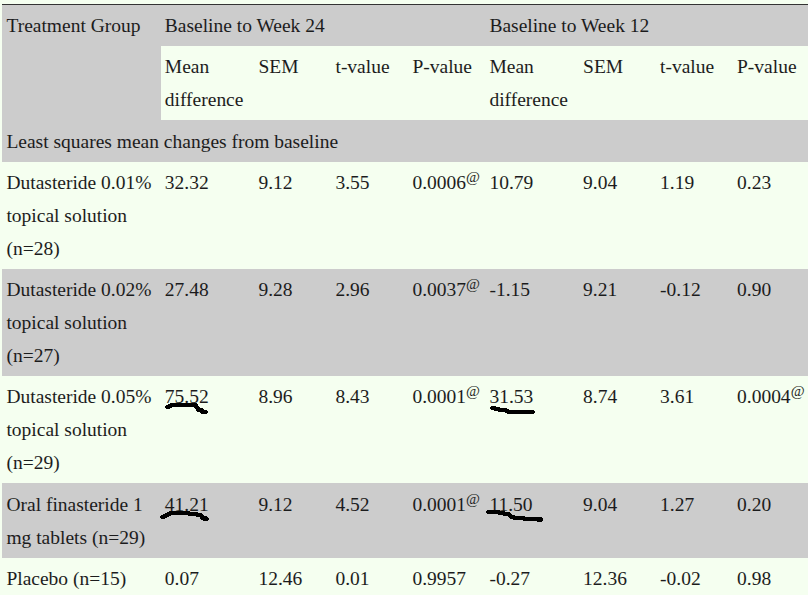
For the highest dose of topical dutasteride (0.05%), the effect size on hair count is 0.8 SD after six months; for hair width, it was 1.2 SD. The 0.01% and 0.02% solutions are about half as effective for growing hair, and a little less effective for increasing its width3.
The devil in topical 5ar inhibitors comes with the dosage. Ideally, you would want to take enough dutasteride to get a positive effect, but not so much that it starts leaking into your blood and messing with your systemic hormones.
The study I cited seemed to find that, at the highest dose, topical dutasteride hardly leaked into the blood4:
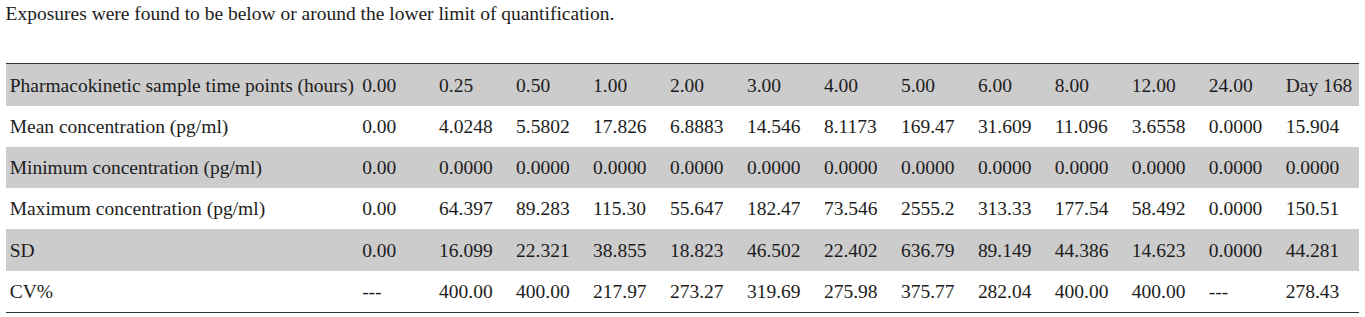
They said that they could reliably measure dutasteride levels in the blood starting at concentrations of 50.125 pg/ml. Most of the time, levels were below that range. The maximum observed value in the study was 2555.2 pg/ml ; a normal dose of oral dutasteride (0.5mg/day) leads to an average stready state of 40 ng/mL — which is 20x higher than the maximum value observed in 0.05% topical dutasteride, and about 2000x higher than the mean value observed.
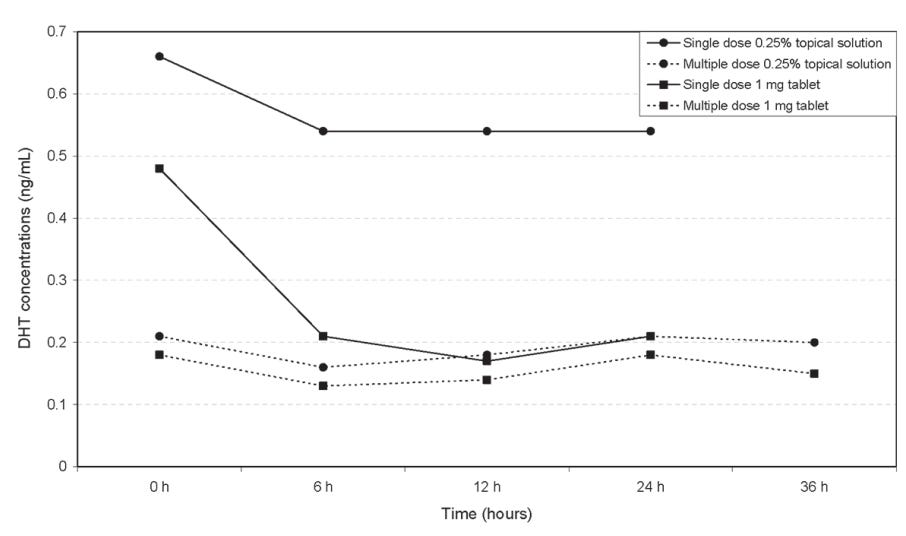
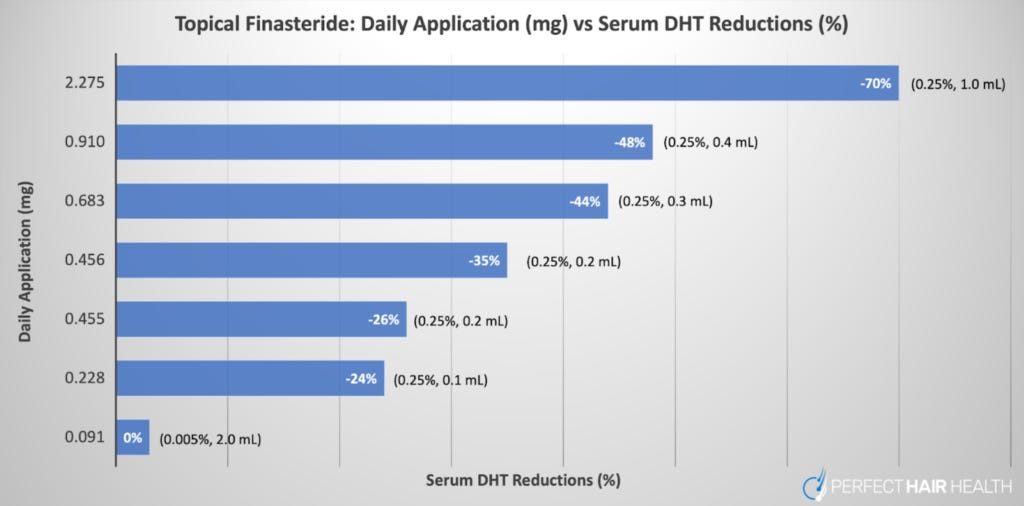
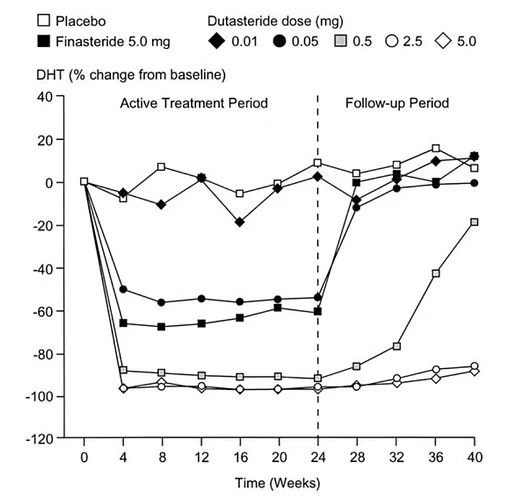
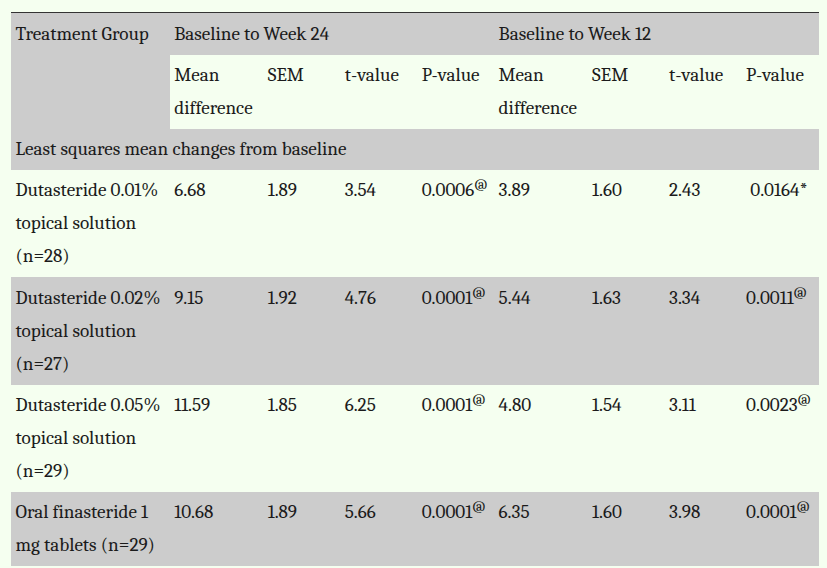
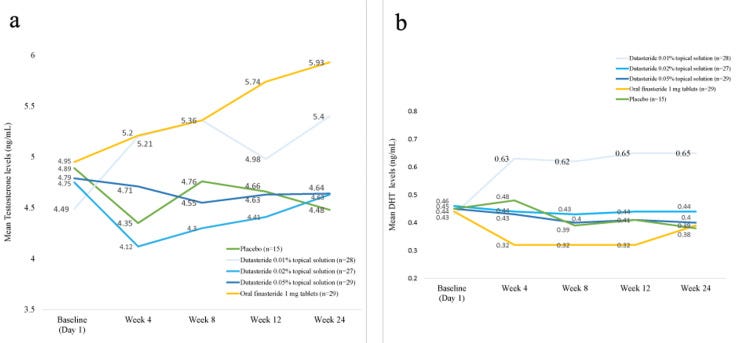
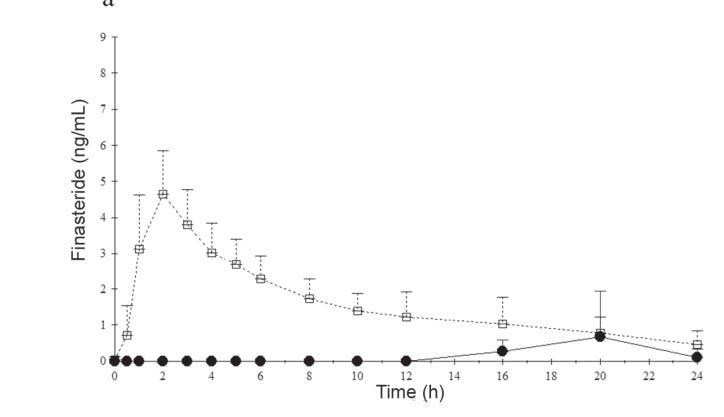
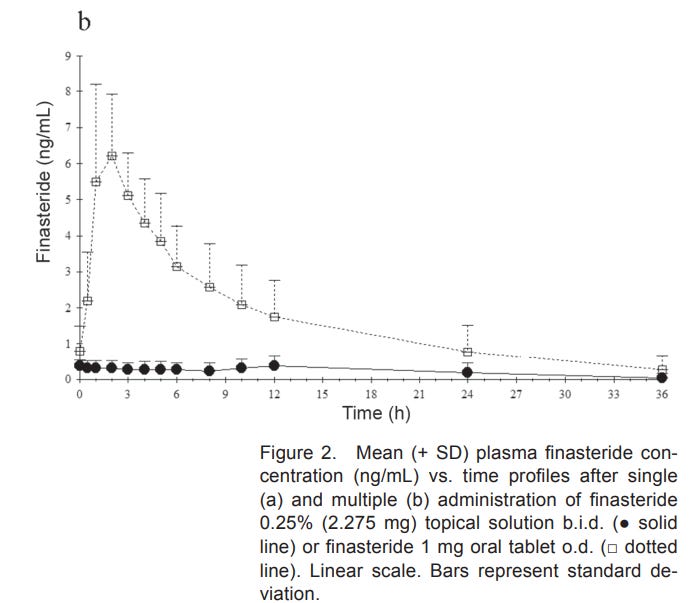
Topical finasteride in concentrations of 0.25% has also been studied. Even though very little of it leaked into the blood5, it did end up inhibiting DHT as much as oral finasteride when multiple doses were administered:
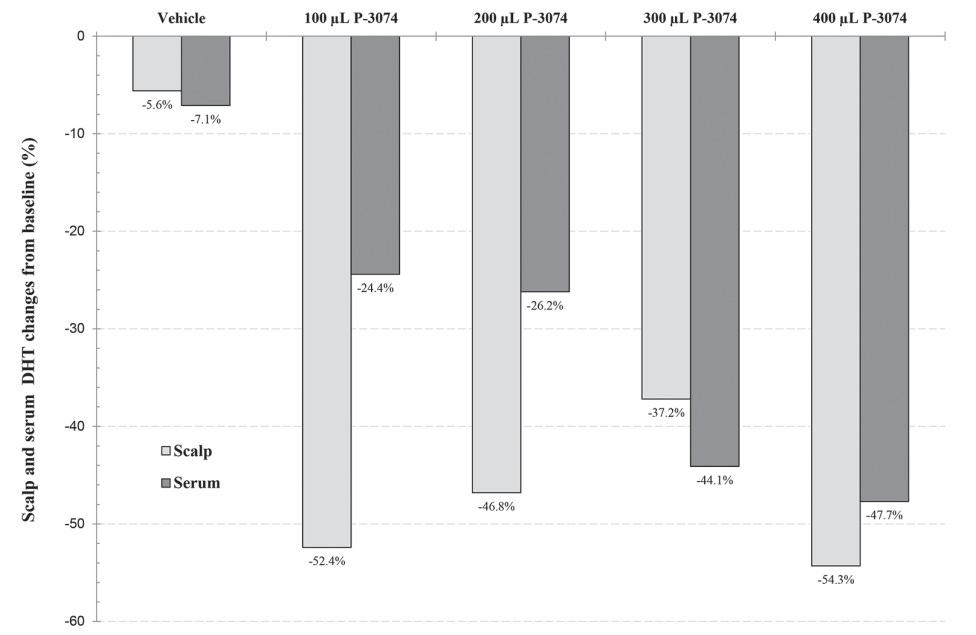
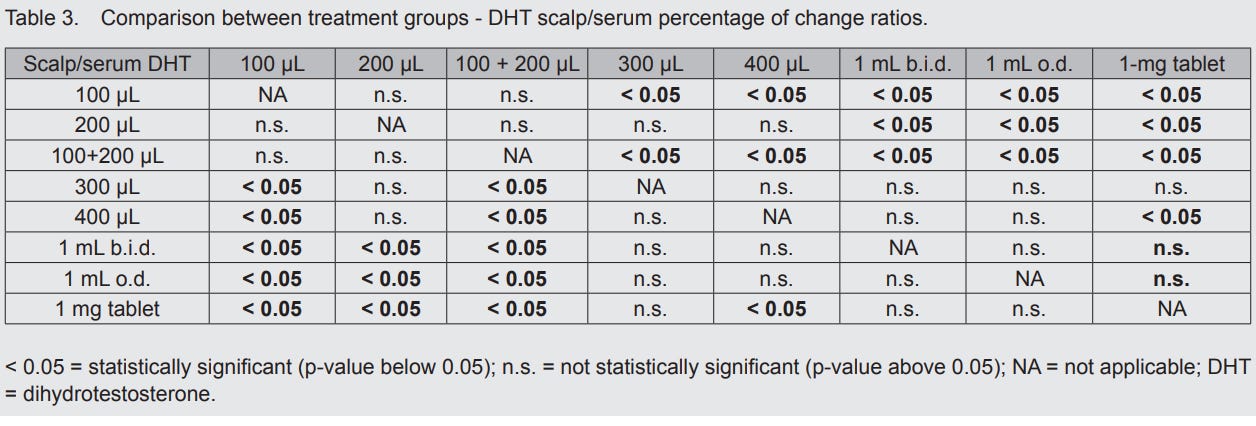
A followup study found that the DHT decrease in the blood from topical finasteride (0.25%) was attenuated when smaller doses of the serum were applied, but the effect on the scalp was basically the same6:
Some guys combined these studies and a few others into a convenient chart:
Because dutasteride inhibits DHT more than finasteride, I’d consider it better for topical use, but worse for oral use. It also has a much longer half life than finasteride, so it takes longer for the effects of the medication to wear off after discontinuation.
Sourcing
Anagen claim to have perfected the science of topical 5ar with their precision dutasteride formula. Personally I wouldn’t recommend the 0.3%7 dose since it’s too high and would probably affect serum DHT. 0.03% should be safe and effective.
There is also the DIY degen route, which I took of course. I bought two bottles of more.hair MH1, which has 10% DMI, which should be enough to dissolve a small amount of either finasteride or dutasteride. I’ve bought 1g of research grade dutasteride and plan to dissolve a small fraction of it it in one of the bottles to see what happens.
The MH1 formula is nice in its own right. The bottles are aesthetic and the spray feels 100x better than dripping minoxidil on your hair and rubbing it in. I also wrote in a nonsense address the first time I ordered, so the post office couldn’t deliver; the customer service people were nice enough to re-ship.
I’m not sponsored by any of the companies I mentioned, and I have a feeling that the owners of both companies would disagree with a lot of what I said in this post.
Alternative treatments (e.g. caffeine, adenosine…)
Caffeine
There is one study of the effect of caffeine shampoo (alpecin) which finds positive effects on hair growth comparable to minoxidil. Visually, the differences look statistically significant across time8, but they didn’t explicitly test for it, which is disappointing. They claimed that the differences in subjective measurements of hair loss were statistically significant, however.
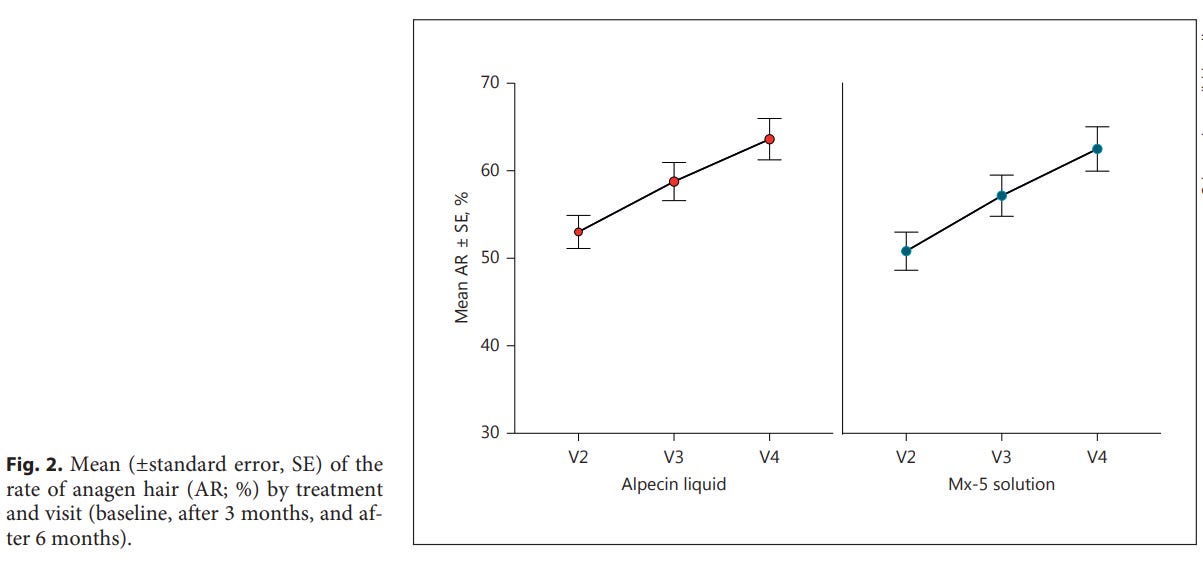
One of the authors on the paper is Adolf Klenk, who is an employee of Kurt Wolff, who designed the alpecin formula. Generally I find these kinds of social/financial tie arguments tedious, but it is something worth weighing into the equation. Unfortunately, this is the only empirical study on caffeine I found.
There’s some mechanistic logic by which caffeine could cause faster hair growth, which makes some sense to me, though I am not liable to trust this kind of reasoning.9 Caffeine also seems to work in vitro; a finding that replicates.
Adenosine
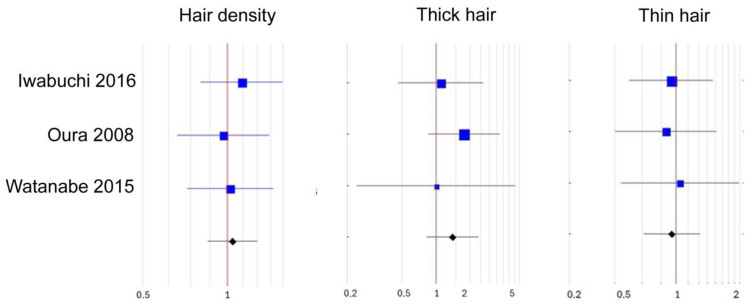
There’s a meta-analysis on it that finds no effect, though the authors chalked that up to low power and bad sample sizes. I didn’t read it, and I was inclined to trust it. Their confidence intervals are wide enough to accomodate for a realistic, small effect.
Fortunately, there’s a high quality study that looks at both the mechanistic pathways by which topical adenosine could improve hair growth. They claim that some of the ways it could work are shared by minoidil, but a few are not: interaction with the androgen receptors and a few pathways: Hippo and Wnt, which supposedly control cell growth and renewal.
Given that it interacts with both androgenic and growth pathways, it could potentially both prevent hair loss and promote hair growth.
Like proper scientists, they tested their hypothesis. Adenosine helped grow hair, by a margin far beyond statistical significance.
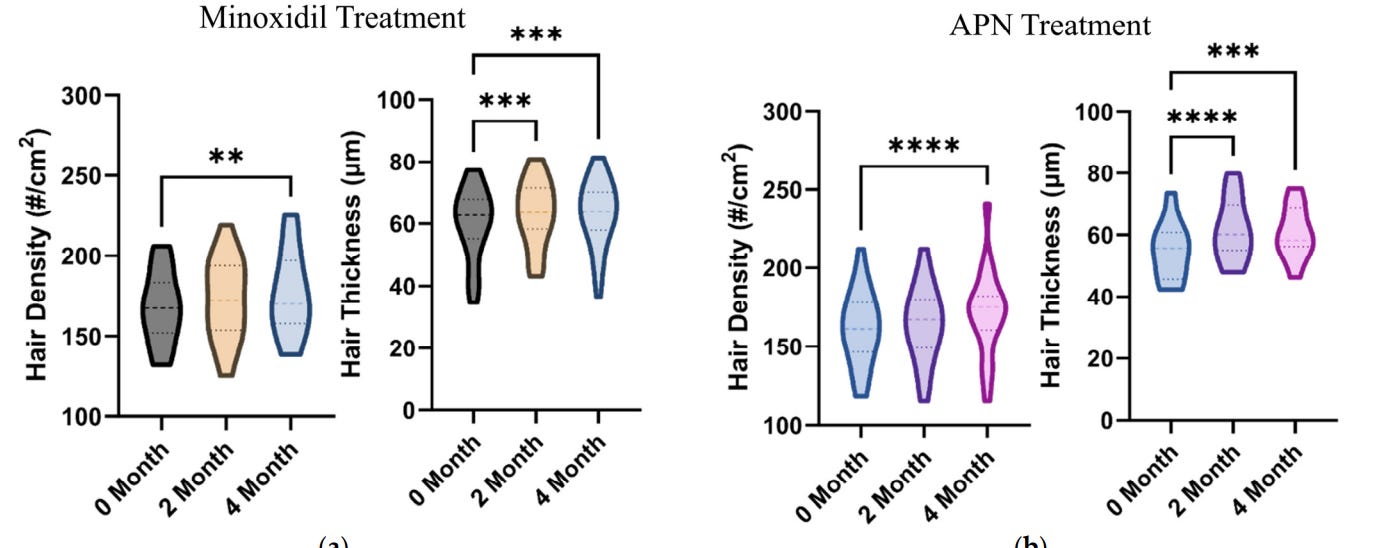
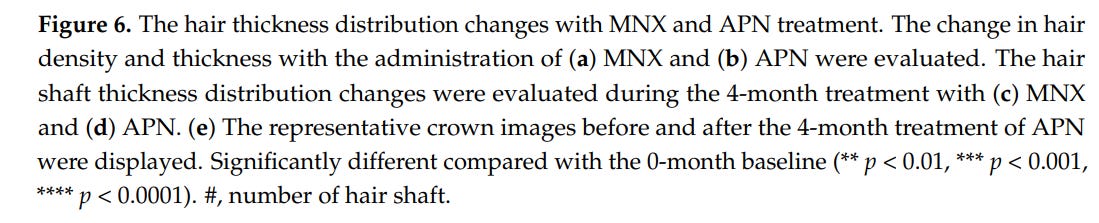
The effect size for hair density was about 0.45 SD in 4 months (compared to 0.4 for minoxidil). In terms of hair thickness, the effect size for adenosine was 0.63 SD compared to 0.3 for minoxidil.

I’m a little hesitant to jump on the 'adenosine works’ bandwagon after just one study, but it’s a pretty good one, and the p-values in it are pretty low. There’s an in vitro study on adenosine does find positive effects on hair growth, but I’m not sure how well the in vitro →in vivo effects translate in this particular domain.
Microneedling
I honestly have no idea if it works. My intuition is that microneedling alone probably doesn’t, but combining needling + ingredients enhances the effects of them.
The original study on dermarolling and hair growth had a terrible p-value (0.04) and the meta-analysis finds no statistically significant effect when only microneedling is done, and extremely large heterogeneity between studies.
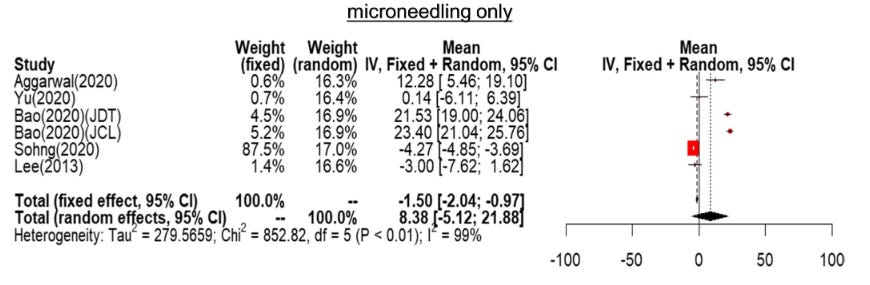
Normally, this is enough evidence for me to toss the towel and give up. But then, the authors found out that if you pool all of the studies together, the effect of microneedling looks statistically unambiguous, even when compared to topical minoxidil alone.
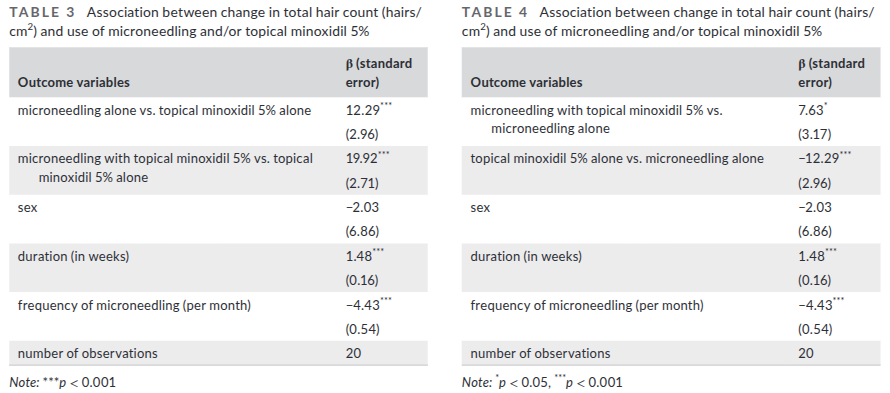
Part of this, honestly, might just come from minoxidil sucking — it doesn’t work that well, and it promotes shedding at first.
Summary
Topical finasteride/dutasteride are the holy grail in terms of safety and efficacy, but the evidence for their efficacy isn’t as solid as it is for oral delivery. Adenosine probably works.
In terms of effect size, topical fin/dut > oral fin/dut > adenosine > minoxidil.
No opinion on whether 5ar inhibitors can work on women. I’ve heard different opinions, both positive and negative in terms of safety and efficacy.
I have no idea if microneedling or other alternative treatments (e.g. caffeine, peptides) work. Because the evidence for these compounds is often ambiguous or of low quality, people have overcorrected into thinking they are useless, which is a little hasty.
From a personal standpoint:
There’s basically two groups of people looking into hair loss research. One of them is older guys who have already lost a decent amount of hair. The other is young guys who want to tackle the problem before they get too bald.
I don’t like giving advice, especially not advice that I cannot take myself. But if you are past a norwood 3, I would recommend looking into a hair transplant. My dad got one a few months ago, and it seems to be going well. From what I can see, he went up 2 stages on the norwood scale to a NW2. He got it in Spain, his country of residence.
If you are sub norwood 3, don’t bother with a hair transplant. Topical finasteride/dutasteride should be enough to prevent further hair loss, and minoxidil/adenosine/caffeine can help regrow hair that was previously lost.
Right now, my hair seems to be following the classic jewish pattern of recession around the temples (aka the vegeta or dracula hairline); my dad also lost hair this way. Fortunately, this means I only have to apply hair serum to basically two spots on my head if I want to keep it.
Further reading:
Derek (More plates more dates) on the genetics of hair loss and prevention.
Post finasteride syndrome: the case for it being psychosomatic
OTC minoxidil far less tolerated than pharmaceutical minoxidl.
Other treatments that I heard about, but didn’t research:
PP405 (massive hype)
RU58841 (hype)
Bimatoprost (FDA approved)
GT20029
TB500
GHK-cu
BPC-157
Keratin
HGH / GH secretogues
Ketoconazole (didn’t notice anything, personally).
Vitamin C (didn’t notice anything, personally).
Castor/rosemary oil.
Melatonin
Levocetrizine
Fecal transplants
Laser therapy
Rezpegaldesleukin (for alopecia areata)
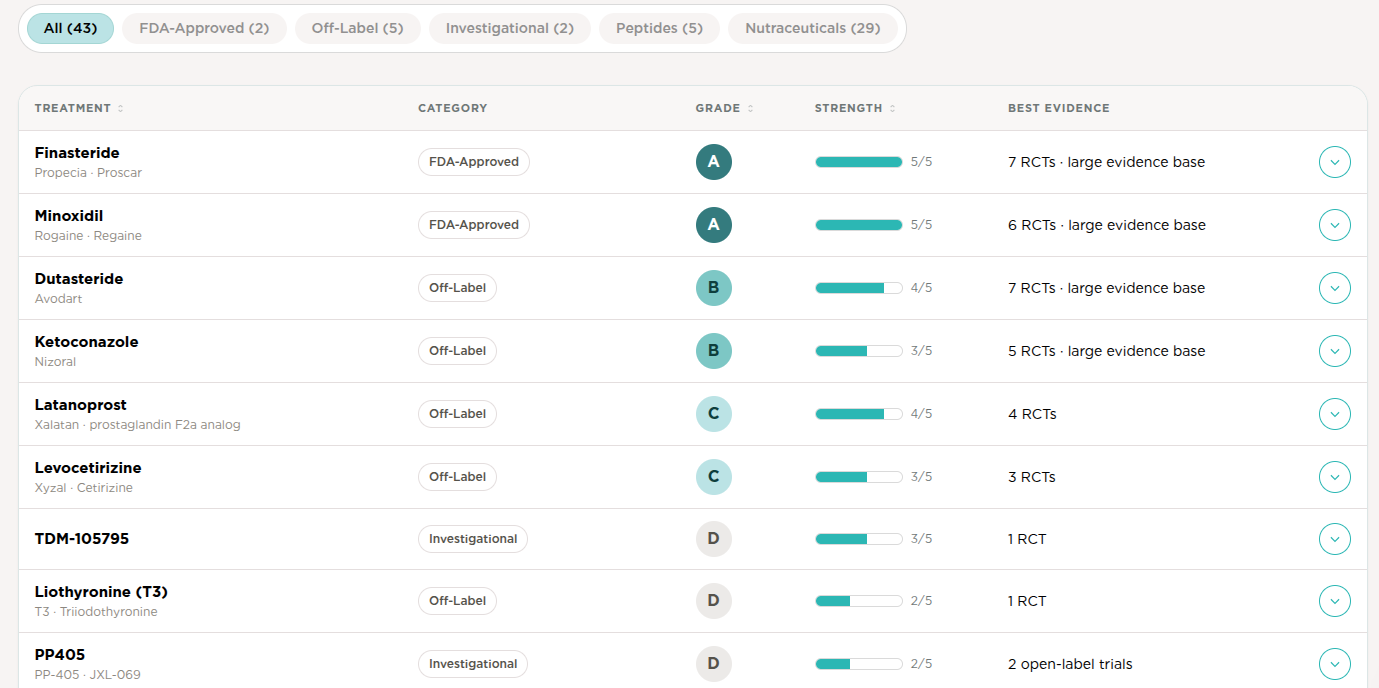
Anagen also have a tier list for hair loss treatments in terms of how solid the evidence is for their efficacy.
Likely risk factors involved: low natty blood pressure (90/60) and a genetic predisposition to POTS (sister has it, older brother is also a fainter).
From a purely technical, environmental perspective I would actually say that athletic ability and obesity are not mutable. People generally understand that it’s better to be thin and fit, but they do not do exercise out of akrasia — they act against their best judgement. Abstract wordcel concepts like mutability and free will are incoherent once you start looking at physiology mechanistically.
Receipt:
They also measured T/DHT levels, not a lot of changes
Receipts:
p-values for the ratio of scalp/serum DHT
God forbid, the 1% dose. Do not buy that lol
Not treatment groups, the argument was that it is comparable
Did you read anything about the "mature hairline" meme? I see it pretty often, not sure if it is true. How many men actually go to NW1-NW2 in early adulthood and stay there throughout middle age?
"Shave it off" is an insidious form of intrasexual competition used by 30-something year old redditors on panicking NW1.5 19 year olds, but if you're middle aged and greying it might honestly be the move. Hair transplants are getting good, but they're expensive and require lifelong maintenance. When I grow a beard, I look about 10 years older, because it hides the smooth skin on my face. I imagine exposing a bunch of smooth shiny scalp skin can help make your skin appear better as well
Oral Fin + Min is goated ngl.
Literally brought back my teenage hairline. Density is still a problem though.