

Caffeine to wake up. Amphetamine to work. Ambien to sleep. Shoe lifts to look taller. Tirzepatide to lose weight. Steroids to get jacked. MDMA to dance. Phenibut to socialise. Retinol to stay young. Finasteride to keep the hairline. Birth control for insurance…
The question I’m starting to ask myself is what biotech has not accomplished.
I’m not interested in making the 10k word philosophical and scientific argument, but I think that a lot of the things we think are part of ourselves — our habits, beliefs, interests, motivations, tendencies — are more contigent than we give them credit for. We have beliefs about who we are, what we like, what we can do, but they aren’t necessarily true, and might exactly be the thing that is preventing us from doing what we want. Could a skinny 17 year old nerd who is addicted to world of warcraft become an extremely attractive bodybuilder? Yes — that’s Zyzz’s life story. I also went from being a college student who was in and out of depression with degen hobbies to being shredded (not jacked yet, still WIP).
Looking at the list of things that people are forced into without any agency, it’s actually pretty small:
IQ. The best nootropics — amphetamine and nicotine — only boost IQ by like 2-5 points, at most.
Aging. It seems possible to attenuate a lot of the mechanical damage and appearance changes that aging causes, but preventing the latent mechanisms behind it seems to be… extremely difficult. I’m not very optimistic about solving it any time soon; I plan to die at the end of the century or slightly after its conclusion.
Facial structure + skeletal build.
Certain medical and psychiatric conditions. Autoimmune disorders, allergies, autism, and whatnot.
People can change their appearance and skin colour with plastic surgery and drugs respectively, but people generally aren’t motivated to do that; for understandable reasons.
Personality, I think, is very easy to change with drugs. Actually, I don’t think people have “personalities”. They have tendencies — behavioural patterns that they gravitate to when they are not confined or under pressure, and are free to exercise their choices on the world. Measured big 5 personality traits are heritable — about 40% if you use self-reports, 75% with peer reports. And even then, they are very easy to change with drugs.
A naturally high strung person, after taking alcohol, will become more uninhibited and less anxious. If they want to preserve their judgement, they can always take phenibut instead, or adjust the dose. The better question is — why don’t they? Maybe they don’t know. Maybe they think drugs are unhealthy (they are, but most are fine at therapeutic doses), maybe they don’t know drugs are that effective, or maybe they are a high strung person because that is what their nervous system wants to become — they feel strangely at ease with their high-strungness.
Because of the moralisation and stigmatisation of certain personality traits, I think many people believe that low social appetites are a function of some pathology, or that people with closed minds were born with the wrong genes or need to lighten up. In some cases, those beliefs are actually true, but I think the more interesting question is why people want to believe those things in the first place, or why people with socially undesirable personality traits don’t change who they are or take drugs to become a different person.
The boring answer is that most of them don’t care to change. They might feel insecure about who they are, or might even think they should change, but I think they gravitate towards those tendencies because of the structure of their nervous systems — their behavioural tendencies serve to maintain a kind of homeostasis.
What about diet, exercise, and sleep (lifestyle triad)?
On diet specifically: personally, I have felt like the relationship between the consensus-rated quality of the food I eat and how I feel throughout the day is weak. More than anything, the foods you eat mostly seem to affect your gut, and indirectly, your weight. Both of those things matter a lot, but independent of that, I think it’s kind of overrated.
Exercise is important imo, as a guy, the QOL difference between being skinnyfat and muscular + lean is very large. Not just in terms of appearance, but in terms of tolerating fatigue and heat; the amount of pain I feel throughout the day also decreases a lot.
Sleep is the most important of the three, but it' is not really a conscious choice. Neither are your diet or exercise patterns, but I’ll leave the case against free will for another time. If you want to sleep, but can’t, then that’s… just life. The same goes for how long you stay asleep.
I also think that people who embrace the traditional lifestyle triad over drugs or biohacking aren’t necessarily making a conscientious or intelligent choice. A lot of the appeal is identitarian, to be the kind of person who does things properly, over the kind of person who tries to find easy solutions to hard problems.
The truth? Sometimes the easy solution just works.
Let’s take Eily Lilly’s latest breakthrough for example. They made ERVE-102, a gene therapy that results in permanent reduction to LDL of 50%. Just one shot. Gone.
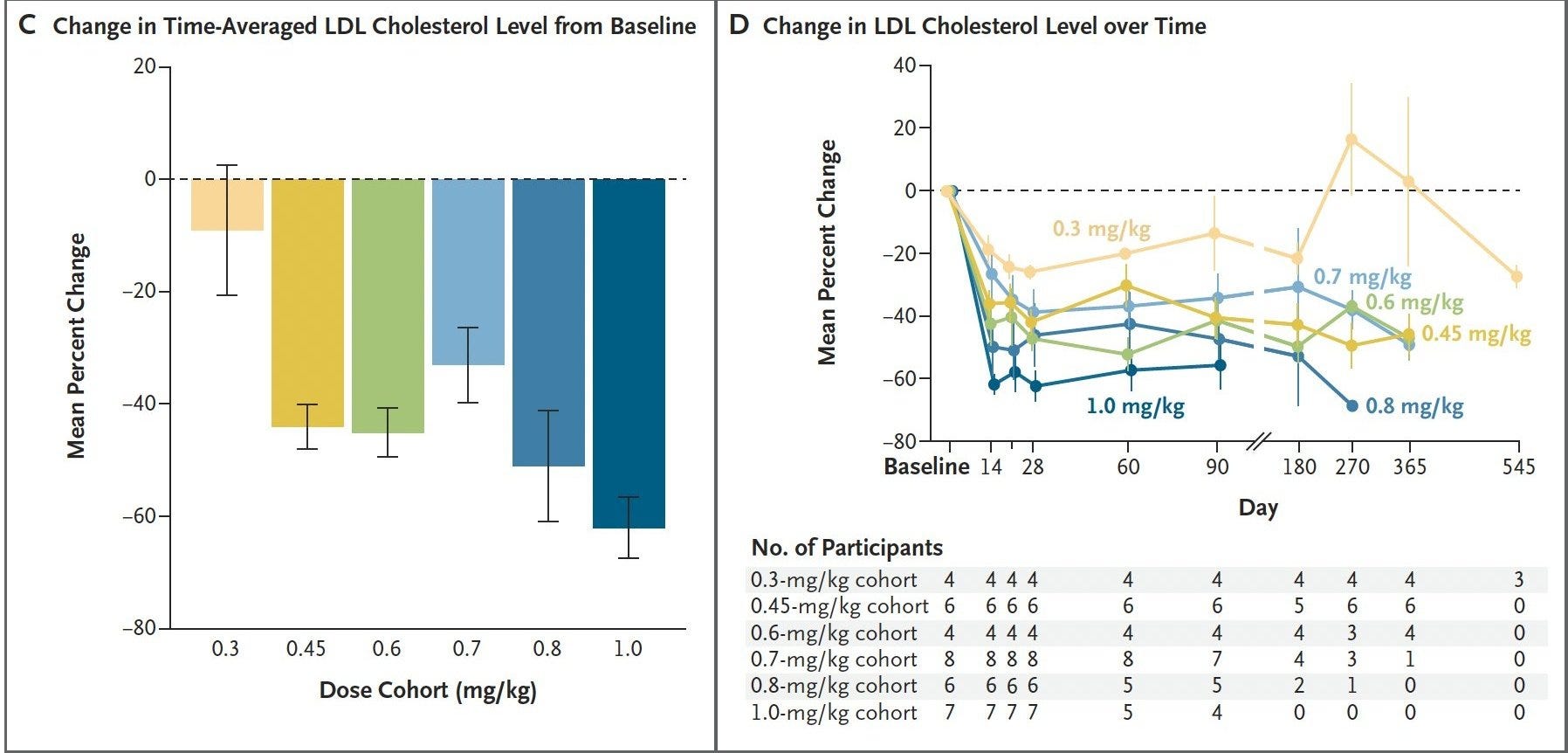
Even with a vegan or specialised diet, reductions to LDL on that level are impossible to achieve naturally. They also have massive effects on the human body; people who carry mutations in the PCSK9 gene have 15-30% lower LDL cholesterol, and 40-80% lower likelihoods of developing cardiovascular disease:
Of the 3363 black subjects examined, 2.6 percent had nonsense mutations in PCSK9; these mutations were associated with a 28 percent reduction in mean LDL cholesterol and an 88 percent reduction in the risk of CHD (P=0.008 for the reduction; hazard ratio, 0.11; 95 percent confidence interval, 0.02 to 0.81; P=0.03). Of the 9524 white subjects examined, 3.2 percent had a sequence variation in PCSK9 that was associated with a 15 percent reduction in LDL cholesterol and a 47 percent reduction in the risk of CHD (hazard ratio, 0.50; 95 percent confidence interval, 0.32 to 0.79; P=0.003).
There are people who live life with loss of function mutations that result in dramatically lower LDL levels, which results in an 88% lower risk of cardiovascular disease.
The principal finding of this study is that sequence variations in PCSK9 associated with lower plasma levels of LDL cholesterol conferred protection against CHD. The reduced incidence of CHD associated with LDL-lowering PCSK9 alleles was observed in two different populations. A graded association between reduced LDL cholesterol levels and a decreased risk of coronary events was found: the nonsense mutations that lowered plasma levels of LDL cholesterol by about 40 mg per deciliter (1.0 mmol per liter) were associated with an 88 percent reduction in the incidence of CHD, whereas the PCSK946L allele, which lowered LDL cholesterol levels by about 20 mg per deciliter (0.5 mmol per liter), was associated with a 50 percent reduction in CHD.
Side effects? None, as it turns out.
Another pattern: people don’t like transhumanism libidinally, but humanity is already transhuman, and has been for millennia. It just so happens that when transhumanism gets normalised, we stop calling it transhumanism. We just call it brushing our teeth, drinking alcohol, and taking NSAIDs.
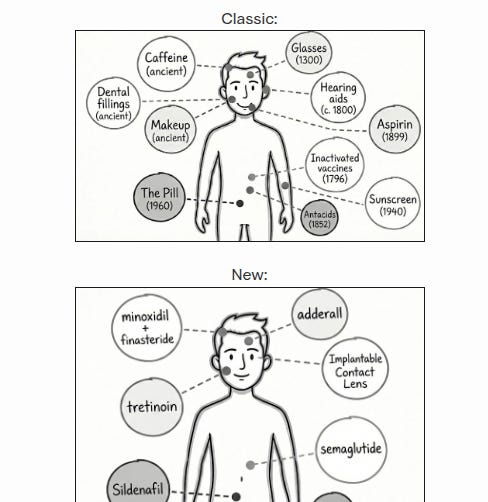
The “normies lol” part of my brain finds this a little frustrating, but I also find it a cause for optimism — that when presented with the right choice in terms of costs and benefits — a lot of people’s revealed preference is simply transhumanism. Just without the bad branding.
II.
Skeptics of human enhancement have relied heavily on the Algernon’s argument: that nature has already picked most of the low-hanging fruit, so highly valuable traits like intelligence are already heavily evolutionarily optimised.
The idea itself makes sense as a heuristic or intuition, but is nonsensical as a principle. It relies on the assumption that the environments humans evolve in don’t change substantially over millenia, or even just people’s own lives.
The heuristic I use instead, is that the more common a physiological problem is, and the more value that can be extracted from fixing it — the less likely it is that it can be solved by one intervention or drug. The logic is that if the problem was big, it would probably have a large effect on people’s fertility, and so if there are genes that cause that problem, they get cut out of the gene pool. If people still have said problem, that means the problem is either very hard to solve, or it is caused by the environment.
The algernon argument also collapses when you consider things that humans value, like happiness, that might not be evolutionarily selected for.
This means that there are human traits which are:
A. Valuable
B. Can be manipulated with drugs or simple interventions.
For example: let’s take the most glaring evolutionary mismatch of our days: that human genes did not evolve to fit in with extremely cheap and extremely tasty food.
We found the answer to the first problem: GLPs. They cause weight loss in about 98% of people. The side effects of them are bigger than people think (I’ve taken retatrutide myself), but I still think they might be worth it for a lot of people.
The other evolutionary mismatch is sleep. Many people have disturbed circadian rythms or just have poor sleep in general. The bad and the good: there are lots of options for drugs and supplements for sleep, but not all of them are good, and they are all targeting different profiles of disordered sleep. I’ve heard some people make the case that GHB is to sleep what GLPs are to weight loss, but the drug got medically gated because people started abusing it; I don’t know if this is true, but I could believe it. I also think the new orexin antagonists could prove to be useful — particularly daridorexant, which has a half-life of 8 hours, which is very convenient for sleeping.
Humans, despite being able to live until 80-100 years old, generally stop reproducing around 40-50 years of age. A lot of biological processes intended to cause reproduction start to collapse at that point; theoretically, this should be an area where medical technology should be able to find easy solutions, and I think we have found them: tadalafil, TRT, GH, facelifts, hair transplants, and retinol (options for women, unfortunately, seem more limited; particularly for menopause).
Besides evolutionary mismatches, the best candidates for traits that can be shifted with drugs are ones that vary based on the time — focus and energy. Predictably, stimulants are very popular and very effective; the best specific choices will vary on the person.
II.
Beyond the fact that diet is overrated, I think that humanity needs to rethink what an healthy food is. The old model that decided what made a food health was:
Hard to overeat (not palatable and calorie dense)
Doesn’t contribute to CVD (low SFA, cholesterol)
Doesn’t spike glucose
Has micronutrients/protein/fiber
Lacks toxins (e.g. mycotoxins, AGEs, ALEs, trans fats, and alcohol)
The problem is that we like tasty food, and tasty food is easy to overeat and spikes our glucose levels. 100 days of chicken and broccoli wears on you.
Fortunately, now that GLPs are here, whether a food is obesigenic is irrelevant, as long as you have access to the internet and $100 ready to spend.
Then, there is the question of getting enough micronutrients1, enough fiber, and enough protein. Which is pretty easy to do; many foods come in a higher protein/fiber/keto/etc versions now, we even have protein soda. Besides that, it’s a question of avoiding toxins, which is genuinely difficult.
Culture has labelled foods as “healthy” and “unhealthy”, as if they are some essential quality that can be defined and measured. The system defines the parts: somebody taking PCSK9 inhibitors does not have to worry about whether eggs cause heart disease. Well, as long as they haven’t built up a bunch of fat in their arteries.
XX.
What happens when somebody only eats pizza in the new era of biohacking?
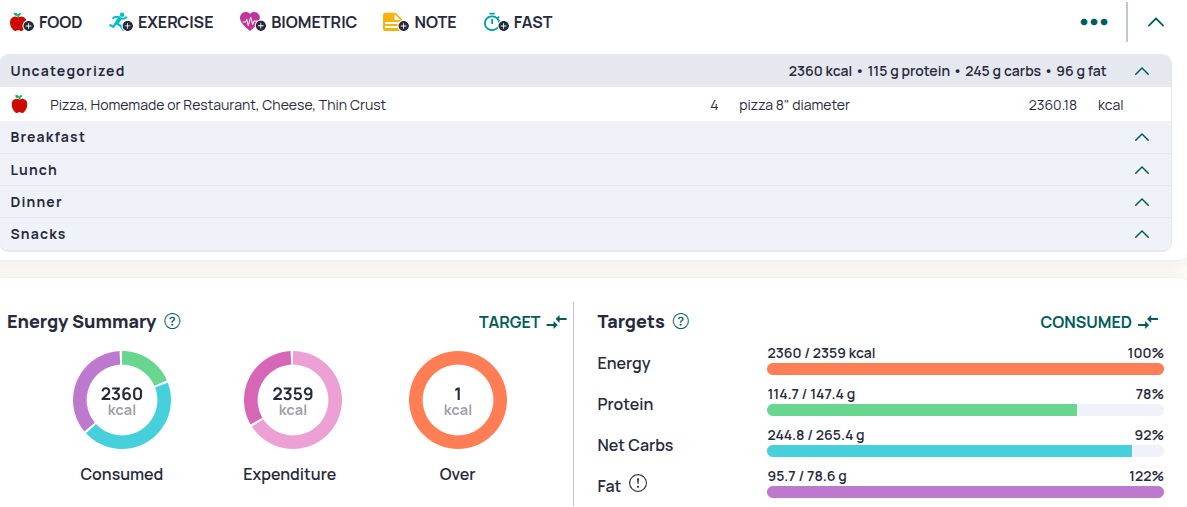
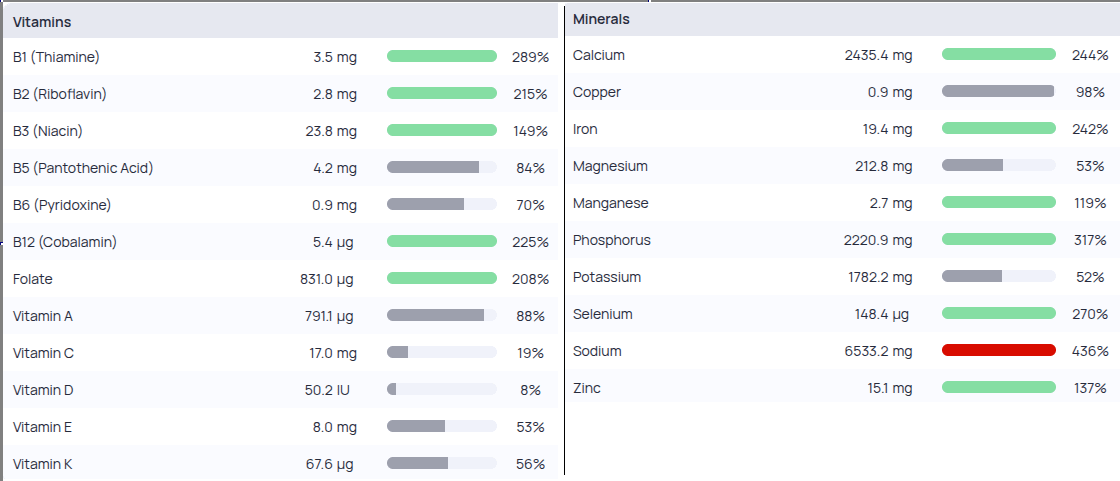
Pizza exceeds 100% of the US RDA in 12/22 of micronutrients, and is an adequate source of all but six of the others: vitamins C/D/E/K, magnesium, and potassium. The only downside is that it is a bit salty.
The traditional reasons pizza is considered unhealthy is that it’s easy to overeat, spikes glucose, and causes heart disease through its high levels of saturated fat.
GLP drugs make the obesity concern irrelevant; if glucose levels are a concern, then the pizza could be eaten in smaller portions, or drugs like jardiance could be used to flatten the curve, so to say.
If the saturated fat is concerning, then statins or PCSK9 inhibitors can be taken.
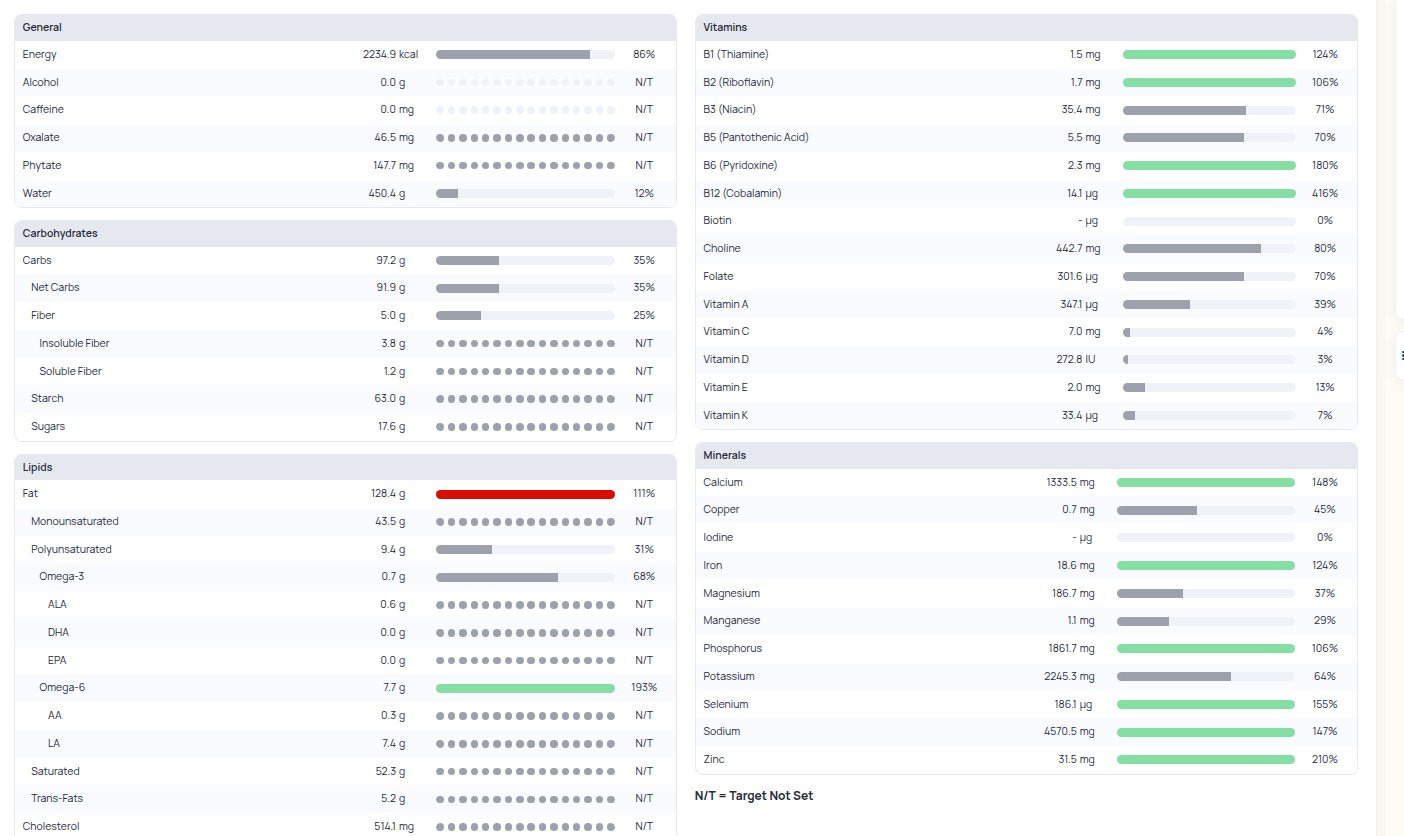
2200 calories of burgers? Good source of B-vitamins, uneven source of minerals:
On that note, most underrated foods post-revolution:
Fried chicken. Should be fine if not fried in PUFAs.
Sushi. Tastes good, healthy.
Huel/soylent. Unfashionable, get the job done.
Eggs. S-tier nutrient density, saturated fat irrelevant now.
Soup is more convenient than it looks. Chuck a bunch of things into boiling bone broth, and voila.
VV.
I see a kind of slave morality in some of the biotech revolution’s critics; that health should be a struggle. That we should glorify the suffering, asceticism, and valor of the classical methods. It would be boring if drugs were less effective; they are offensive because they are not.
III.
There is this idea in physiology that the body is this complex black box that we don’t really understand, and if we try to mess with it too much, bad things happen.
Humans are like airplanes. How airplanes are able to fly isn’t known, but we can judge whether they do or do not. We can change their size, internal components, and seats and test if they fly. Most of the time, these changes don’t affect whether they are able to fly, but sometimes they do. We judge airplanes by whether or not they fly. I judge myself primarily by how I feel and what I do.
It is true that, when you pull on a lot of the most important human levers (dopamine, norepinephrine, serotonin, orexin, GLP, etc) to accomplish one end, you often end up accomplishing a lot of other ends indirectly. Spiking norepinephrine makes people more focused, but it also causes vasoconstriction and an increased heart rate. The thing about these knobs is that, even if the body has its natural homeostasis, there is no reason we need to respect it. Through trial and error, humanity has found that some people are better off when they tune their knobs around.
The nice thing about there being no cosmic judge of reality is that the truth goes both ways. No cosmic judge means that if a drug comes with benefits, it must come with costs — because there isn’t a knob in the human body that makes it so that if you turn it, you get all of the benefits but none of the costs. But it also does mean that there is nothing that dictates that the benefits and costs have to cancel out. You can literally cheat reality if you want. Nobody is stopping you.
Sometimes drugs have side effects that are not worth tolerating. Thalidomide was initially sold OTC in Germany to reduce morning sickness in pregnant women, and then people found out that women who took this drug had children with severe birth defects. So it got pulled off the market, and now is a prescription-only drug. Many such cases.
That doesn’t necessarily mean that all drugs that get withdrawn or discontinued are too unsafe, but it does mean that the medical system is able to positively identify dangerous drugs and act appropriately. High sensitivity, low specificity.
Some parts of humans are integrated in a way that is hard to deny. Sleep, for example, affects basically everything we do. I’ve unfortunately learned that the hard way these past 3 years. The general rule is that human systems are separate: exercise doesn’t affect depression or IQ, IQ doesn’t do much but making people money (it isn’t even that good at that), and money doesn’t do much to people besides allowing them to retire (actually, that’s pretty useful).
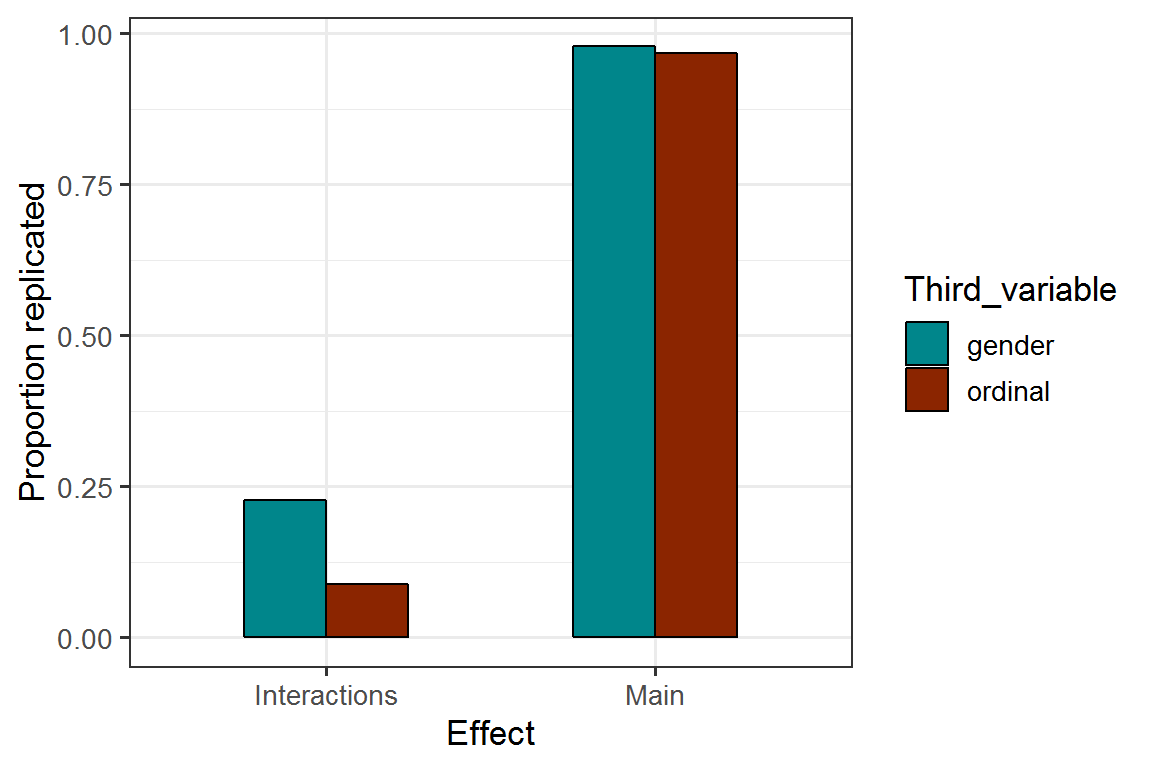
You can even see this in datasets. Interactions are much more rare than main effects — Kirkegaard has also written about this.
Also, how could you forget the most reliable prior ever: nothing ever happens.
91% of our worries do not come true.
IIIIII.
The most slept-on enhancements out there are probably fixing serious medical problems people frequently have, but do not know about. The most common ones being:
Sleep apnea.
Varicoceles
Vitamin/mineral deficiencies
High blood pressure
Androgenetic alopecia in women
Celiac
Fatty liver disease (retatrutide can help now!)
Depression/anxiety/ADHD (often undiagnosed or misdiagnosed)
Further reading:
Why processed food makes us fat (cooking and softening)
Processed food followup (worse than cocaine?)
Viagra for life extension (doesn’t work, but doesn’t kill you either)
Eliminating distractions in longevity research (e.g. caloric restriction is useless)
Longevity FAQ — Laura Deming
Longevity FAQ — Nintil
The case for testosterone (not interested in either T or HGH, personally)
Will Making Your Kids Tall (with HGH) Shorten Their Lives? (it should, actually)
Personal update
Somnolesence/sleep problem has improved — I can do productive things without amphetamine (currently only on caffeine, which is mid and 100% worse than low dose amph). I have started to have panic attacks revolving around light (?) and being trapped in social situations; not sure if this was a function of moving, or if it’s a sign of declining health.
I’m starting to wake up with heart palpitations, which is a symptom of sleep apnea
Sleep study will come… soon. Hopefully. IDK tbh
Currently working on something important; posting will be less frequent from now on.
Some people get past the micronutrient problem by using multivitamins or supplements. I don’t have a strong opinion on these, but I find the debate around them stupid and boring. From what I gather, it might not work because some supplements lack bioavailability (so just get the right version), they need to be eaten with protein or fiber (just do that), because absoprtion is antagonistic in some cases (so choose the multi intelligently), or because they don’t do anything besides correct deficiencies (meme argument). Overall I actually think the mechanistic case for supplementing, if your diet is limited, and the right pill is taken at the right time is fairly strong.
Good points on existing biotech being underutilized. A lot of incels and MGTOW (I don't use the terms disparagingly) talk about some hypothetical future of artificial wombs making women irrelevant, ignoring that surrogacy exists today and isn't even that expensive. IVF surrogacy technology is so incredible to me. The fact that a woman can give birth to a child which she has no blood relation to is something incredibly sci-fi which people don't seem to have noticed is a thing for some reason
Agree with your list of 8…add UARS there as well.