

The most jarring thing about the most intense experiences1 I've had:
Getting cut in the eye
Sleep paralysis rape demons
Various nonconsensual sexual events (not violent rape)
Hundreds of emotional turbulences, caused by a relatively volatile personality
…Is how inconsequential they all ended up being.
I will say, though, the fact that I can still see in both eyes is a statistical miracle. It’s very unlikely I will be able to undergo laser surgery, but I’ve been keeping two eyes on the various alternatives I could try.
From what I have seen, is a very alien mindset. People tacitly think that intense experiences must have the same intense effect on our selves: either they traumatise us, make us a stronger person, or alter our brains in some unseeable way. I haven’t seen that in my life. It is possible, for example, that the paratyphoid fever episode may have aggrevated digestive issues… but they seem to go away when I take a prebiotic, take KLOW (unsafe but works), or reduce my caffeine intake. I don’t really know why.
Strangely, the statistics on this seem to vindicate the alien position — that child abuse, as measured by court records, does not correlate with future psychopathology.
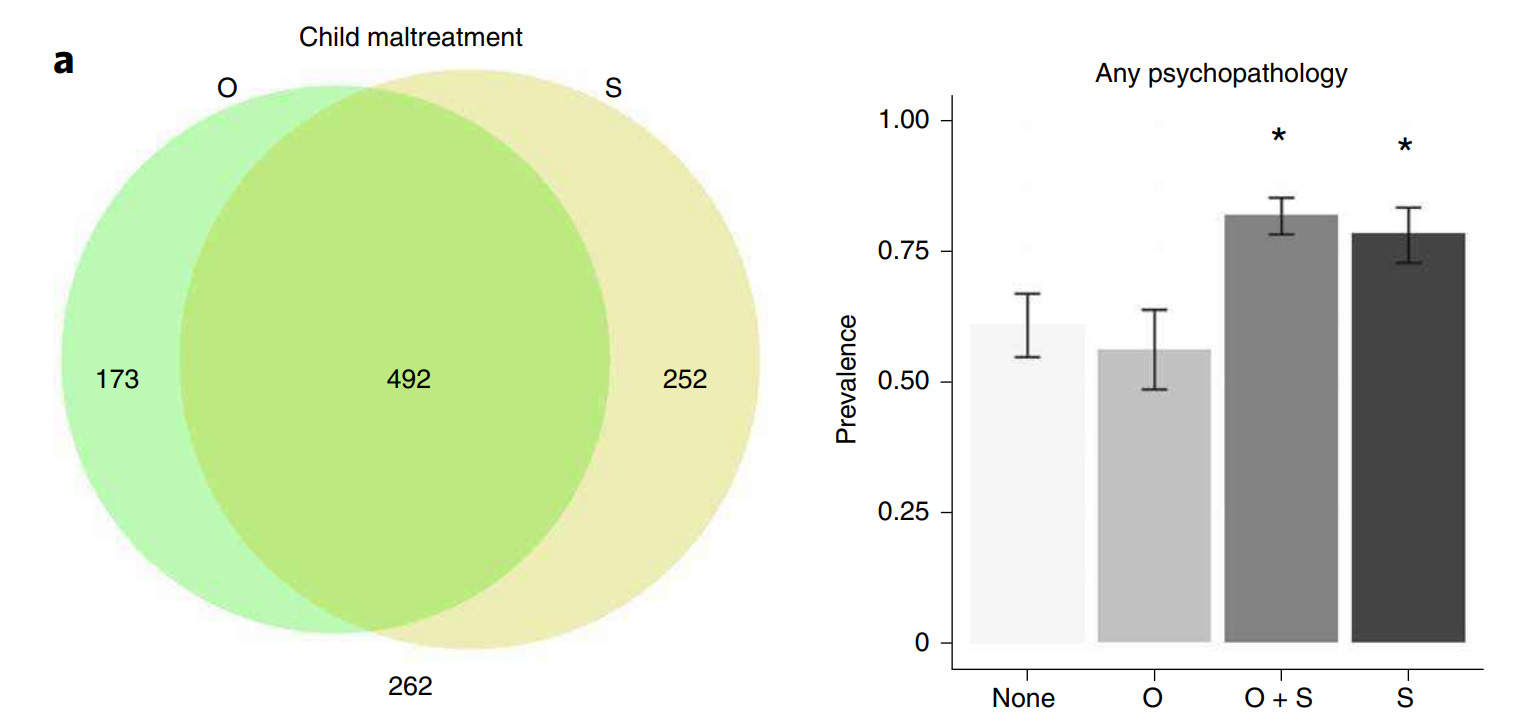
I think I understand why people confuse the emotional intensity of an event with the intensity of its effect. People’s emotional reactions to events are often downstream of events or situations that could have large consequences. Paratyphoid fever has a fatality rate of 10-15% without treatment; the body intuitively understands which diseases have a mortal risk, and the nervous system adjusts accordingly. Paratyphoid makes you feel like you will die. It’s bad. But the fear goes away. If you survive, otherwise you die with it.
Humans can reason logically. That — even if we may have undergone something intense or devastating — that the sensible thing to do is to keep moving forward. The problem is that humans, even ones with a psychological tendency to systematise, are far from rational.
There is a tradition in philosophy that believes the passions - emotions, motivations, and feelings — can somehow be disconnected from people’s beliefs and actions. It is a “high status” and “masculine” belief system. But it’s completely nonsensical. All thinking and acting is motivated. Motivation is downstream of all people’s emotional and affective experiences. We are all slaves to our nervous systems. The reason why these disgusting, depraved stoics hide and repress their emotions is because they are what truly control them.
The stoics may be extraordinarily wrong about human nature, and how a good life should be lived. Though that doesn’t mean that, through its own irrationality, that the nervous system cannot recover from its own destabilisation. The problem I see is that it appears, sometimes, this does not happen. Whether this is through an unusually stressful environment, a long/intense/salient event, or a physiology with a predisposition to destabilisation.
The scientists have named this destabilisation of the nervous system PTSD and/or schizophrenia. I am skeptical of the metaphysical authority of these psychiatric constructions, but the underlying pathology of the disorder does seem real: somebody goes through something, and they end up scarred for life. I can believe that. Stereotypically, it tends to happen to soldiers. And it makes sense: war is awful.
What I am trying to get at, is that a lot of the events that are extremely painful, extremely rare, linked to social taboos, or sound like the kind of thing that would mess somebody up, are not necessarily the kinds of events that cause permanent psychological change.
II.
I believe that a lot of conventional beliefs about certain taboo topics, like drugs, philosophy, race, and human nature — are wrong. Not just complex. Wrong in aggressively or unbelievably mundane ways.
Some people, particularly in the rationalist sphere, have started to notice this.
So I’ve seen some people start to question whether rape is actually that bad, or maybe that the age of consent should not exist. Not explicitly of course, they aren’t stupid.
My own thinking is that rape and child abuse should probably be illegal.
People have their own experiences regarding this, but I’ll give my two cents of the issue. To put it bluntly, getting touched sexually feels good. In a libidinal, direct manner. It doesn’t matter who they are or what they want… life is like that sometimes. But then the other part of the nervous system reacts, and interprets the situation. Different emotions and feelings arise. Discomfort or fear are often felt as an emotional reaction to being groped. I happen to know this first-hand.
Here’s the problem at hand. Morality is fake. Social convention is made up. In every human society, people’s brains are filled with nonsensical ideas about what they should do, and what they should find enjoyable. I would be very happy to get rid of all of them.
In the case of rape, there actually are intuitive, practical reasons as to why people don’t want to be raped, beyond whatever garbage their culture filled their head with. If somebody puts a gun to your head, and tells you to take off all of your clothes… they can basically do whatever he wants to you, regardless of your own interests. They can kill you. They can stick any of their body parts through any hole in your body. They can give you an STD. They can impregnate you, if you are a woman and they are a man. They can beat your head in, take off all of your clothes, and leave you for dead. Assuming you do not want to get shot.
None of these risks are socially conditioned or made up. Most of them are not a trick of the mind, a simple function of the way we interpret the world. I am glad some people are able to undergo those events without suffering the consequences of all those risks, but their lucky experiences are not evidence that rape is a benign event.
Some say rape is about power, some say it is about sex; I would prefer if we did not discuss such a complex event with something as rotten and reductive as language.
I think Aella once said that she was molested as a child, and that she didn’t feel like the event traumatised or changed her. Her interpretation sounds plausible to me. I don’t know what her position on rape or the age of consent is; I think somebody else might conclude, from that event, that abusing children is ok. I don’t think it is. An adult and a child2 have a similar power imbalance: the adult knows far more about sex, they know far more about the world, they have far more resources, and they have a much more physically powerful body. I think it’s completely reasonable to treat a sexual relationship between a child/adult the same way one would treat any other nonconsensual sexual event (as porous and ontologically questionable as the concept of consent is).
Humanity evolved under a natural range of experiences, many of which are intense — relationship breakups, running from muggers, fighting — it’s plausible to me that evolution selected for people who were able to psychologically recover from those ordinary experiences more effectively. I suspect that I’ve had an unusually large amount of strange experiences, but I think it’s safe to say that extremely intense emotions are a universal human experience.
It’s incorrect to say that emotions and feelings have purposes, but they do have functions: the emotional intensity of an event is often a function of the potential risks that could result from it. The fact the imagined risks did not occur is not evidence that the risks could not have happened, or that the emotional reaction was not warranted.
Where I am going with this, is that if intense emotions and feelings are something that all animals have had to endure, at various points in their lives, that it’s likely that animal cognition and physiology adapted accordingly. The intensity comes, it fades, and people return to their natural state — more accurately — their physiological homeostasis.
“Experience” is a cursed word — an amalgamation of memory, feeling, consciousness, and the relationship between all these things. But it’s simple so I’ll use it instead.
Like an actual, physical, child, not a 17 year old
Wait, the sleep paralysis demons were RAPE demons?
What do you think of Genie Wiley, can she recover