

This is another case of a debate that is muddled by semantic confusion and scientific studies that do not show what they claim to show; the broader answer is that the most optimal exercise routine is not something that can be generalised.
II.
Marathon runners, who do prolonged but low intensity exercise, do not gain much muscle size or strength from running Neither do farmers, who work hard for long hours, but do not regularly deal with heavy loads. Resistance training is effective at inducing gains in size and strength in comparison to other activities because of the larger loads.
Progressive overloading — incrementally increasing the difficulty of workouts over time — is also essential in the development of hypertrophy and strength. It’s also broadly true for other domains of life: growth is driven by a pressure to improve.
These statements are uncontroversial. Where bodybuilders disagree is whether higher volumes (sets + reps) of lifts or higher intensities are more effective at increasing strength or inducing hypertrophy.
Intensity, in bodybuilding, is poorly defined: some people think of it in terms of subjective experience, some use it as a synonym for load size, and others think of it mathematically. I define it as how close a person gets to momentary failure, how far they took their body to its physical limits.
Scientists speak of this debate as if it were happening in a vaccum. Intensity (proximity to momentary failure), volume (sets + reps), and load (total weight lifted) are dependent — they cannot be evaluated in isolation. Somebody who adds more reps to the same 40lb dumbell curl exercise is getting closer to momentary failure. It’s also harder to sustain the same amount of reps after multiple sets, and increasing sets also increases proximity to failure. It’s the year/cohort/age problem of physique science.
People have tried to solve this by asking people to lift with one rep in reserve, that is, the person lifts until they think they are 95% done. The problem here is that I think, broadly speaking, people’s bodies are capable of more than they think, and can kick in to a different gear when they are under enough pressure or motivation. So the people who try to lift until 1 rep in reserve could reasonably be lifting anywhere between 0-5 reps in reserve, which introduces measurement error, which causes regression to the mean, which causes false positives.
So not only is the debate conceptually confusing; the empirical evidence that would be necessary to solve it basically can’t exist.
III.
Speaking practically, lifters are a heterogeneous group: 6 year olds exercising with their parents, 80 year old women, unemployed 19 year olds, and 23 year olds on trenbolone. These people do not have the same bodies, motivations, and incentives.
Personally, I have genetically gifted muscles, but hypermobile joints and bizarrely small wrists: 5.9 inches, about the size of the average woman’s. My muscles can go much father than the rest of my body, when it comes to doing most exercises.
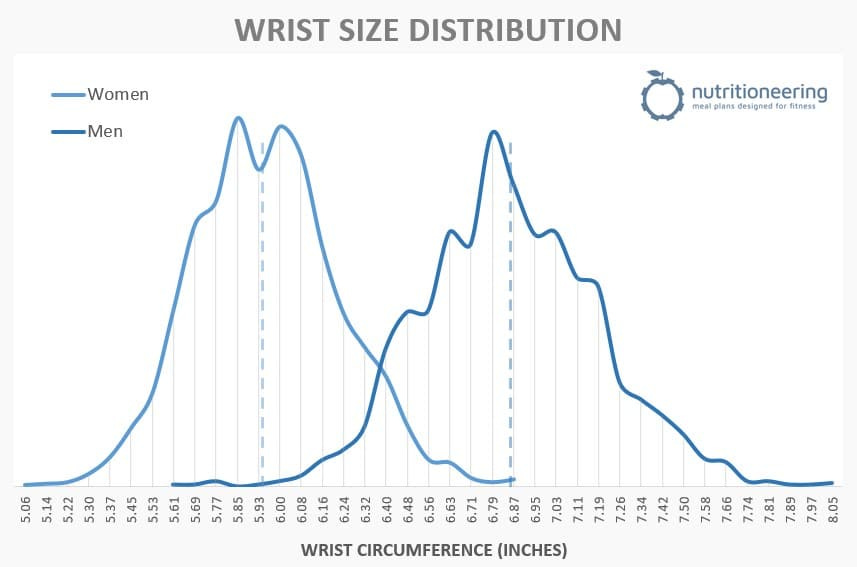
If I try to train to failure in any exercise that involves substantial wrist strain, I am setting myself up for failure. If a muscle can’t perform an exercise, it might tear or strain, but they recover quickly because they are vascularised; that is not the case for bones and joints. It doesn’t matter if it is the “right” way to do things. My heart also recovers rapidly from intense exercise, so it doesn’t make sense for me to have long intervals between sets, even if they maximize gains for the average person.
A 39 year old CEO with 5 children might get more gains by spending an additional 15 minutes at the gym, but his time might not be best spent doing that. Maybe he would prefer to spend more time with his children, or work harder on his business.
VI.
And that’s not the end of it. Mentzer also accurately captured a different problem: that there are three types of muscle movements: concentric (the muscle contracts), isometric (the muscle does not move), and eccentric (the muscle expands). For example, in dumbell curls, the upwards movement is concentric, the stagnant motion is isometric, and the downwards motion is eccentric.
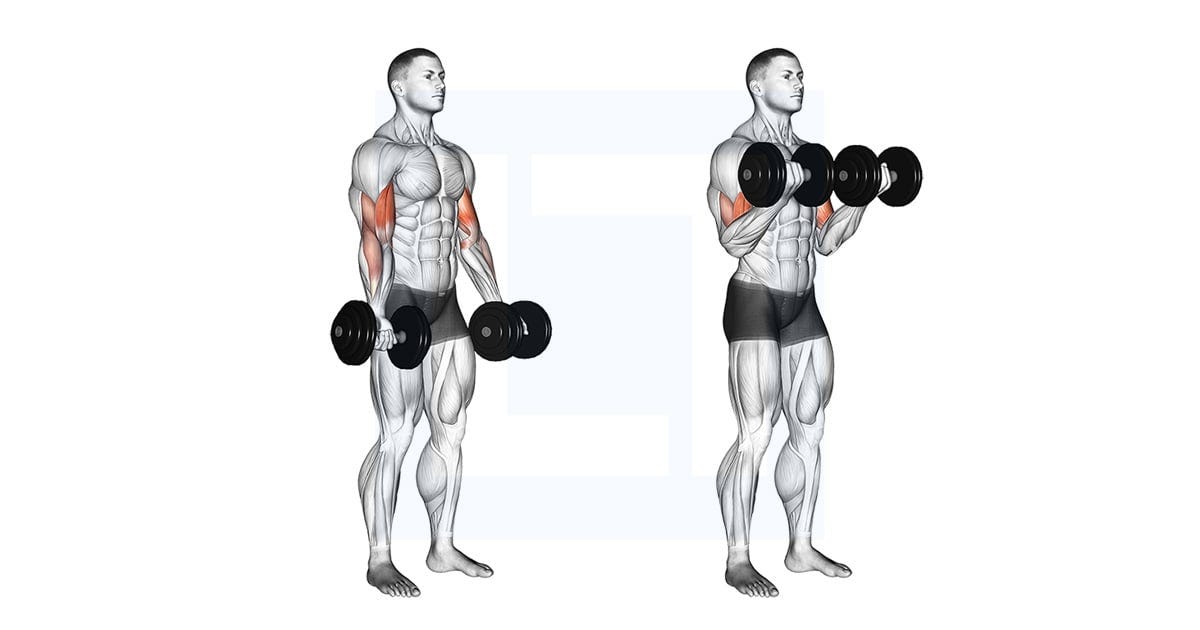
In the dumbell curl, it is more difficult to raise the weight than to keep it still, and more difficult to keep it still than to lower it because of the way gravity works. Bodybuilders failing at raising the weight likely could continue to keep it still, or at least lower it. A momentary failure to complete an exercise does not imply a maximisation of intensity.
To ameliorate for this issue, he typically had his clients do regular exercises until they tired, and then he assisted the concentric movements of their last few reps, so that they could exhaust their eccentric and isometric capacities.
So how do you actually train then?
My intuition is that an optimal workout would combine three different types of exercises: low load + high rep sets and high load + low rep sets.
Weightlifting with a low load initially recruits type 1 muscle fibers, which are weaker, but more energetically efficient. Over time, those fibers get exhausted, and the type 2 fibers get recruited. Higher loads instantly recruit the type 2 fibers due to strength demands. Combining these two maximises the amount of fibers that are subject to hypertrophic stimuli.
It’s probably best to wait until a muscle recovers to train it; this is because it is still undergoing hypertrophic stimulation, and the amount of work it can generate in a given session will be lower if it is not fully recovered. How quickly recovery happens depends on the intensity of the training and individual; the heuristic seems to be 1-2 days for smaller muscles like calves/forearms/abs/, 2-3 days for triceps/biceps/delts, and 2-4 days for pecs/biceps/thighs/back.
What do I actually do?
Strict every-other-day (EOD), maybe 2 upper body days for every full-body day. High loads and average volume.
I like EOD because it stabilises unhelpfully high or low motivation, preventing both overtraining and laziness. At first, my joints found it hard to keep up with that much volume, but with time, I adapted and am basically fully rested whenever I walk into the gym.

You can define volumes as sets and then there’s no evaluation problem. Yes, intensity and volume are linked, but that’s by construction: we are evaluating which side of the tradeoff to take.
heavy fahves on the compounds. Do more weight than last time.